
Why is my refrigerator warm but freezer cold?
If your freezer works but your refrigerator is warm, your compressor is almost certainly fine. The freezer getting cold proves the refrigeration system is running. What's broken is the path cold air takes from the freezer section into the fridge. That path depends on an evaporator fan, a defrost system that keeps the coils clear, and a damper that controls airflow. Any one of those failing will leave your fridge warm while the freezer stays cold. The fix is figuring out which one.
What causes a refrigerator not cooling but freezer works?
Evaporator fan motor failed. The evaporator fan is the part that pulls cold air off the coils and pushes it into the fridge section. If it stops spinning, cold air stays stuck in the freezer. This is the most common cause when refrigerator not cooling but freezer works is the symptom. Open the freezer door and listen. If you don't hear a fan running, that's your answer. The motor sits behind the freezer back panel and comes out in under an hour, and it is a part we keep on the truck.
Defrost system failure and frost-clogged coils. The evaporator coils sit behind a panel in the freezer. Every 8 to 12 hours, a defrost cycle runs to melt ice off them. When the defrost heater, thermostat, or control board fails, ice builds up until it blocks airflow completely. The evaporator fan is still spinning but pushing air through a solid block of ice. Diagnosis: unplug the fridge for 24 hours with doors open. If it cools normally after that, your defrost system needs repair.
Broken damper or air diffuser. The damper is a small door or flap between the freezer and fridge sections. It opens to let cold air in and closes when the fridge hits target temp. If it gets stuck closed, no cold air moves through. If it sticks open, the fridge gets too cold and freezes food. Dampers can fail mechanically or electrically depending on the model. A damper is a small mechanical assembly behind a panel in the fridge section, which puts it at the low end of refrigerator repairs.
Thermistor (temperature sensor) failure. The thermistor reads the fridge temperature and tells the control board when to call for cooling. A bad thermistor sends wrong readings, so the board never opens the damper or runs the evaporator fan long enough to cool the fridge section. You can test a thermistor with a multimeter -- resistance should change predictably as temperature changes. If it reads flat or erratic, replace it. The thermistor is one of the cheapest parts in the refrigerator.
Blocked vents and overcrowded fridge. Check this one first because it's free to fix. Cold air enters the fridge through vents, usually along the back wall. If food is pushed against those vents, airflow stops. This especially happens in the deli drawer area and along the back of the bottom shelf. Pull everything away from the vents, give it two hours, and see if temps come down. If they do, you've saved a repair call.
How to diagnose and fix this yourself
Start simple. Pull food away from the back wall vents inside the fridge and the vents between the freezer and fridge sections. Give it two hours. If temps drop, blocked vents were the problem.
Next, listen for the evaporator fan. Open the freezer door, press the door switch to simulate a closed door (a piece of tape works), and listen. You should hear the fan running. No fan sound means the motor likely failed. On most side-by-side and top-freezer models, evaporator fan replacement is DIY-possible if you're comfortable removing a back panel and unplugging a connector.
Run a manual defrost test. Unplug the fridge and leave both doors open for 24 hours. Plug it back in. If the refrigerator starts cooling normally, your defrost system is the problem. The heater or defrost thermostat needs replacement, which is a straightforward repair on most models.
Check the damper. On most fridges it's accessible behind a panel at the back of the fridge section. Push the flap with your finger. It should move freely and spring back. A damper that won't move needs replacement. If all these checks come up inconclusive, you're likely looking at a control board issue and it's time to call a tech.
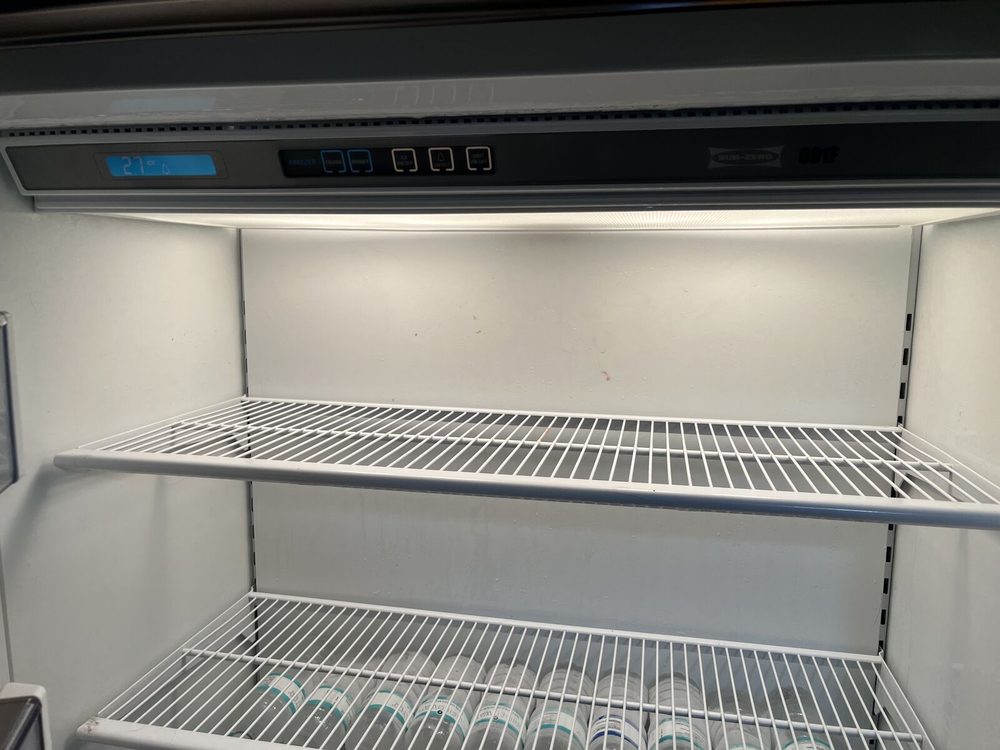
How cold air moves between the fridge and freezer — and where it stops
Almost every refrigerator sold in the last thirty years has a single evaporator that chills the freezer, then moves cold air from the freezer to keep the refrigerator cool. The fridge and freezer compartments share one cold source: a fan pulls cold freezer air off the coils, and a portion of it must circulate through a channel into the refrigerator compartment, where it settles over the fresh food shelves and drawers. When that air is not circulating — dead fan, iced coils, stuck damper — the freezer can stay cold indefinitely while the refrigerator section drifts warm, because the cold is simply never reaching the refrigerator. That is why a warm refrigerator with a working freezer is a different animal from a fridge that loses cooling everywhere: the sealed system still works, and every likely culprit is an accessible fridge part behind the freezer panel rather than a compressor.
It also explains the sequence you may have noticed. At first the fridge may drift a few degrees and recover; then the refrigerator may hold in the 50s for days; then it can stop cooling entirely while the freezer still makes ice. Each stage is more frost or less fan. Dirty condenser coils, by contrast, weaken both compartments at once — so if the freezer may still be freezing but soft ice cream was your first clue, coils are a possible cause worth ruling out with a flashlight before you go deeper. Different possible causes leave different fingerprints, and knowing the possible reasons why your refrigerator behaves this way is what keeps you from replacing parts on a guess.
Quick checks before any repair: settings, door seal, and clearance
A few troubleshooting tips to help you rule out the free stuff first. Check the temperature setting — a dial bumped to its warmest mark during a grocery load is a classic, and the refrigerator temperature should sit at 37 degrees F. If the shelves feel cold but food spoils anyway, the air is close but not cold enough, which points at airflow rather than settings. Inspect the refrigerator door next: a torn or flattened gasket lets warm, humid Tampa air in, and cool air continues to escape at the same spot, so the box runs constantly yet never quite gets there. Close the door on a dollar bill — if it slides out freely, the gasket is not sealing and the fridge will not cool properly no matter what else you fix. Keep the time the door is open short during your test day, and move items that may be blocking the vents inside your refrigerator: tall boxes on the top shelf block the vents and prevent cold air from dropping into the fridge compartment. Finally, give the cabinet an inch in the back and clearance on the sides so heat can leave the condenser.
If the fridge is still warm after all of that, run the manual defrost test above — unplugging the refrigerator melts hidden frost, but a full melt can take up to 24 hours, so do not cut it short. Cooling that returns and then fades within a week confirms a defrost fault. And know when to stop: if the refrigerator is not cooling after every check, or a day later it still isn’t cooling properly, the remaining suspects need a meter. A refrigerator isn’t cooling by accident at that point — something measurable failed. When the complaint reads fridge not cooling but freezer works even after this whole list, and the box is still not cooling on day two, a tech can diagnose and repair it in one visit. Many refrigerator owners burn a whole weekend here; the honest math is that a $69 diagnostic that tells you whether repair makes sense costs less than one cart of spoiled groceries. We restore cooling on the same visit for most airflow failures because the fan motors, defrost thermostats, and dampers ride on the truck.
Expert opinion — Anatoli Didenco, owner, Perfect Appliance Repair Tampa. This symptom is my favorite call of the week, because the news is almost always good. A freezer that works means the expensive half of the refrigerator is healthy — what failed is a fan, a heater, a sensor, or a flap, and all four are same-visit fixes. The mistake I see most is a homeowner assuming compressor death and shopping for a new fridge while a modest part sits iced over behind the freezer panel. Get the diagnosis first. The odds are heavily in your favor with this one.
When to call a refrigerator repair tech
Call a tech if the 24-hour manual defrost test didn't fix things. That rules out a simple frost-clog and points to something that needs proper diagnosis -- failed defrost heater, thermistor, or control board. Replacing a control board without confirming it's the actual problem is an expensive guess.
Also call if you can't access the evaporator fan on your model. Some French door and built-in refrigerators route the fan behind panels that require disassembly most homeowners aren't set up for. Forcing it risks damaging the liner or refrigerant lines.
In Tampa Bay, Mark at Perfect Appliance Repair Tampa sees defrost system failures constantly. High humidity accelerates frost buildup on evaporator coils -- it's one of the most common refrigerator repair calls in Florida. The humid air gets pulled into the fridge every time you open the door, and the defrost system has to work harder than it would in a dry climate. If you're in Tampa Bay and your fridge is more than 8 years old, the defrost heater or thermostat is a strong first suspect.
If you'd rather skip the DIY phase, here's what a visit costs: $69 diagnostic, 100% applied to your repair if you approve the work. No fix, no fee. That is our guarantee. Get a repair estimate before deciding. On older refrigerators, a control board repair can cost more than the fridge is worth. A straight answer on cost upfront saves you from throwing money at the wrong problem.
Related services
Book same-day service or read more about the exact repair:
- Refrigerator not cooling
- Freezer repair
- Refrigerator repair
- How long refrigerators last in Tampa — and what shortens it
- Refrigerator light not working? Bulb, switch, or LED board
- What that refrigerator noise is telling you
- Refrigerator repair cost guide for Tampa
Call or text (813) 522-0014 or book online — Perfect Appliance Repair Tampa covers Tampa, South Tampa, Wesley Chapel, Zephyrhills, Dade City, and surrounding Tampa Bay.
Anatoli Didenco is the owner-technician of Perfect Appliance Repair Tampa, with 20+ years of hands-on technical experience in refrigeration and appliance repair across Hillsborough, Pinellas, and Pasco Counties. He specializes in refrigerators — particularly Sub-Zero, Wolf, and premium built-in systems — and sealed-system and compressor work. He personally answers the phone and shows up at the door. Read more on the About page.
Perfect Appliance Repair Tampa serves Tampa, South Tampa, Wesley Chapel, Zephyrhills, Dade City, and the surrounding Tampa Bay area. Reviews are available on the company’s Google Business Profile and BBB listing.
We Stand Behind Our Work.