Why is my refrigerator running but not cooling? +
If the lights are on and the compressor or fans are running, the cause may be dirty condenser coils, a weak evaporator fan, a sealed-system restriction, a bad start relay, a failed temperature sensor, or a control board issue. Heat and humidity make these show up faster here, especially in garages, older kitchens, and homes with poor airflow around the fridge.
Why is my freezer cold but the refrigerator section warm? +
This usually points to an airflow or defrost problem. Cold air starts in the freezer and moves into the fresh-food section, so if the evaporator coil is frozen over, the damper is stuck, the fan is weak, or the air channel is blocked, the freezer can still feel cold while the fridge side warms up.
Why is my refrigerator not cooling after a power outage? +
Power surges and voltage drops can damage control boards, inverter boards, start relays, compressors, and sensors — common in Florida storm season. Sometimes the fridge powers back on but the cooling system doesn't restart correctly, which is why electrical testing matters before replacing expensive parts.
Should I unplug my refrigerator if it isn't cooling? +
If the freezer back panel is completely frozen over, unplugging for 24 to 48 hours may temporarily restore airflow, but it doesn't fix the root cause. A defrost problem, bad sensor, failed heater, or control issue will come back within days or weeks.
Is the compressor always the problem when the fridge is warm? +
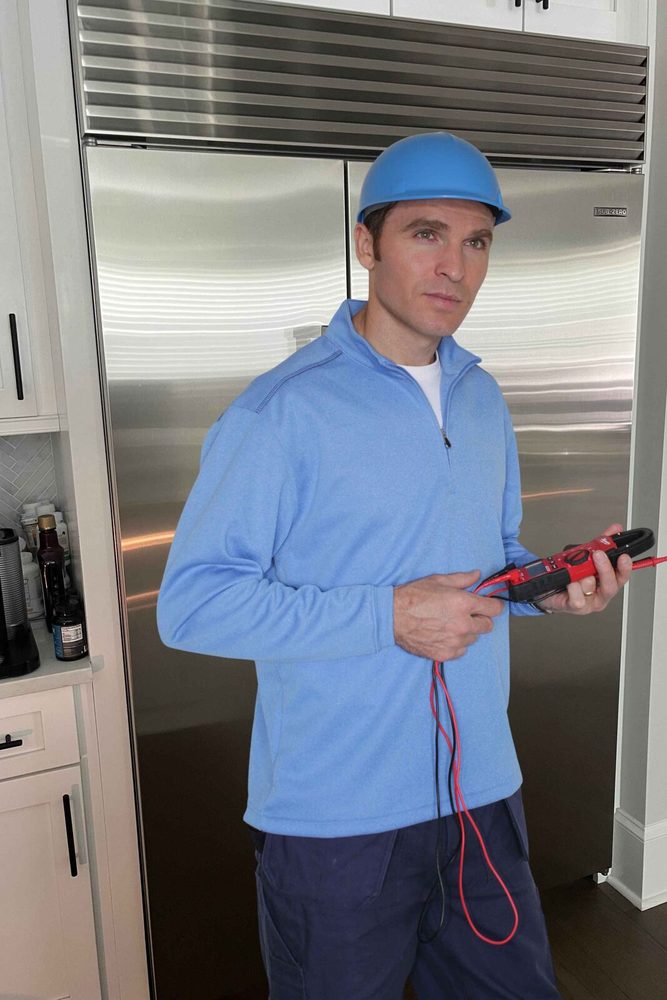
No. A warm refrigerator doesn't automatically mean a bad compressor. I've seen homeowners nearly replace a unit because someone guessed "compressor" when the real problem was a start relay, fan motor, dirty condenser, sensor, or control issue. Compressor diagnosis takes proper testing and amp-draw readings, not guessing.
How do I know if my refrigerator has a sealed-system problem? +
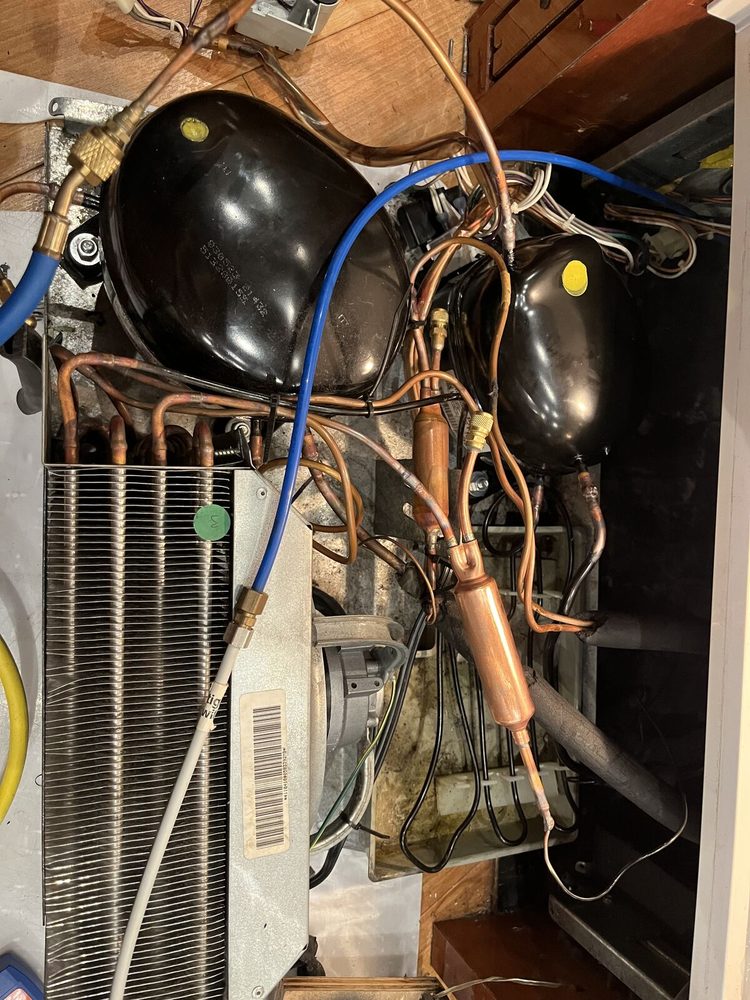
Common signs include a running compressor with weak cooling, an uneven frost pattern on the evaporator coil, warm fresh-food and freezer sections, a clicking or overheating compressor, or very slow temperature recovery. Sealed-system issues can include refrigerant leaks, restrictions, weak compressors, or contaminated systems.
Why does my refrigerator cool sometimes and then get warm again? +
Intermittent cooling can come from a failing control board, a weak fan motor, a bad defrost system, a temperature sensor issue, loose wiring, an overheating compressor, or dirty condenser coils. It's frustrating because the fridge can seem normal part of the day and fail when the kitchen heats up.
Why does my refrigerator work better at night? +
At night the kitchen is cooler, doors open less, and the heat load is lower. If your fridge cools better overnight but struggles during the day, that points to dirty coils, weak airflow, a tired compressor, poor condenser ventilation, or a sealed system losing efficiency.
Why is my refrigerator not cooling in the garage? +
Garage units in Florida work harder because of high ambient heat and humidity, and many household refrigerators aren't designed for extreme garage heat. Dirty coils, weak fans, and poor airflow can turn a small problem into a major cooling failure.
Can dirty condenser coils really stop a refrigerator from cooling? +
Yes. Dirty coils make the compressor run hotter and longer, leading to poor cooling, high energy use, compressor overheating, and early part failure. In Tampa Bay, dust, pet hair, humidity, and garage installations make coil cleaning especially important.
Why is there frost on the back wall of my freezer? +
Heavy frost on the freezer back wall usually means a defrost problem or airflow restriction. The evaporator coil may be buried in ice, blocking cold air from reaching the fresh-food section. Common causes are a bad defrost heater, sensor, thermostat, or control board, or a blocked drain or air path.
Why is my refrigerator clicking but not cooling? +
Clicking can mean the compressor is trying to start but can't — a failed start relay, overload, capacitor, inverter issue, wiring problem, or compressor failure. The correct repair depends on electrical testing and amp draw, not just the sound. On many LG units, this is the classic linear-compressor symptom.
Is it worth repairing a refrigerator that isn't cooling? +
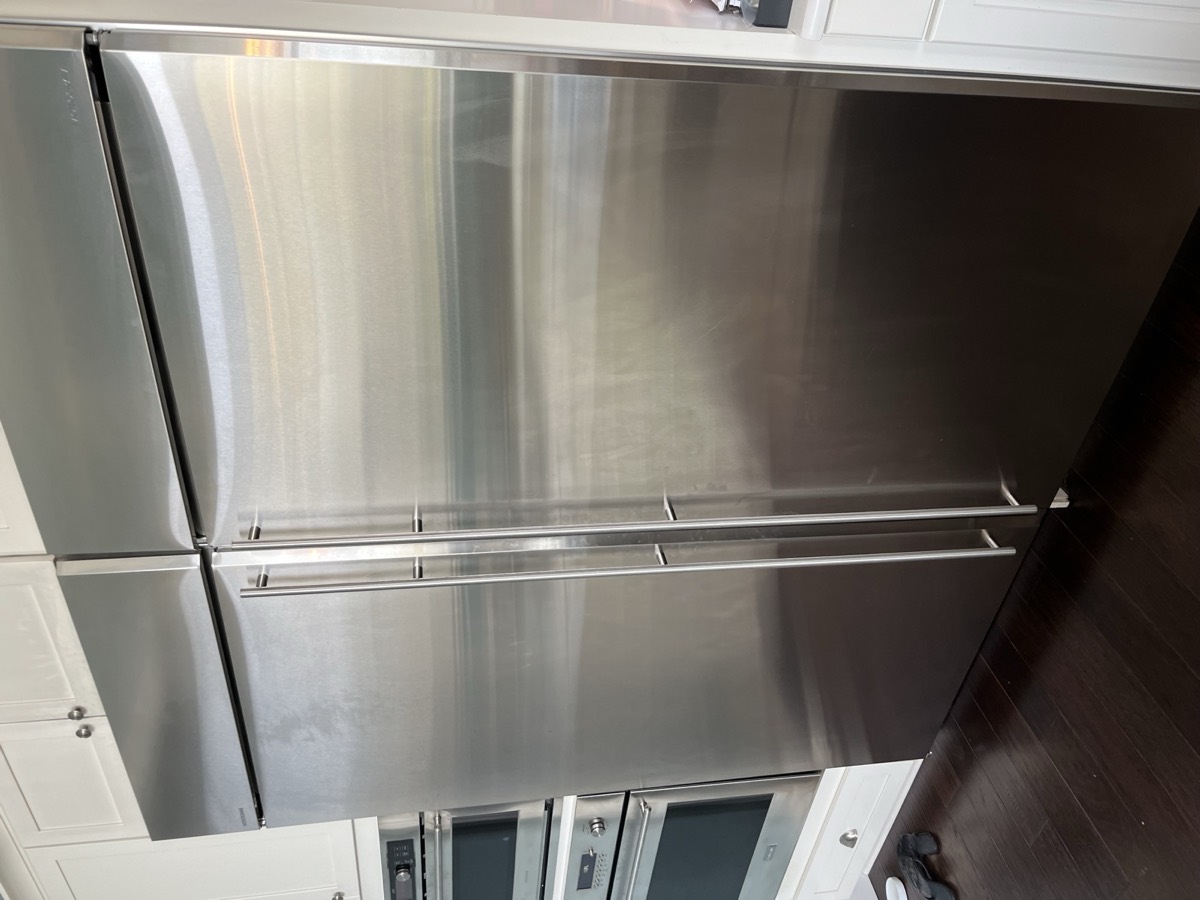
It depends on the brand, age, condition, parts availability, and type of failure. A simple fan, sensor, relay, or defrost repair is usually worth it. A major sealed-system repair on a low-cost unit may not be. Premium refrigerators — Sub-Zero, Monogram, built-in KitchenAid, high-end counter-depth units — are almost always worth diagnosing before replacement.
What should I check before calling a technician? +
Confirm the fridge has power, listen for fans or compressor noise, look for frost on the freezer back panel, check that the doors seal, make sure the temperature controls weren't changed, and confirm the condenser area has airflow. Don't keep opening the doors — that warms the food faster.
When should I call for same-day repair? +
Call the same day if both compartments are warming, food is starting to thaw, you hear clicking from the compressor area, the fridge stopped after a storm, there's heavy frost buildup, or the unit is under 10 years old and worth saving. Fast diagnosis often saves groceries and keeps a small failure from becoming a big one.
What is the average lifespan of a refrigerator? +
Most standard refrigerators run somewhere between 10 and 15 years, and built-in units like Sub-Zero regularly go past 20 with maintenance. In Florida the number lands at the lower end of that range for one reason: the condenser has to reject heat into a kitchen that sits in a climate averaging 91°F highs from June through August. Coils that get cleaned twice a year genuinely outlast coils that never do.
Is it cheaper to repair or replace a refrigerator? +
The rule of thumb the trade uses is the 50 percent rule: if the repair costs more than half of a comparable new unit, and the refrigerator is past about eight years old, replacement starts to make sense. It is a guide, not a verdict — a ten-year-old Sub-Zero worth several thousand dollars and a six-year-old builder-grade top-freezer are not the same decision. Use our repair-or-replace check above, then get a real diagnosis before you buy anything.
What is the most common refrigerator failure? +
Across everything we see in Tampa Bay, the defrost system and the condenser are the two that come up most: a defrost heater or thermostat that lets ice block the evaporator, and a condenser coil so packed with dust and pet hair that the unit can never catch up. Both are far cheaper than the compressor failure people fear when the fridge goes warm.
How much does refrigerator repair cost in Tampa? +
The honest answer is that nobody can tell you over the phone, and anyone who does is guessing. What we can tell you is the structure: the diagnostic is $69, and it comes off the repair in full the moment you approve the work. You get the real number in writing, on site, after we know what actually failed — before a single part is ordered.
How do I know if my refrigerator is actually broken? +
Put a glass of water on the middle shelf with a thermometer in it and leave it four hours. Above 40°F in the fridge or above 0°F in the freezer means something is wrong, even if the light comes on and you can hear it running. A refrigerator that hums but does not hold temperature is a broken refrigerator.
How long does a refrigerator repair appointment take? +
A diagnosis takes about 30 to 45 minutes. Most common repairs — defrost components, fans, drains, gaskets, ice makers, control boards — finish in the same visit if the part is on the truck. Sealed-system work and compressor replacement usually mean a second visit, because the part is ordered to your model and serial.
Are you licensed and insured? +
Yes. Licence L23000428039, insured to $1 million, and EPA Section 608 certified for handling refrigerant. The owner does the work, so the person who diagnoses your refrigerator is the person who repairs it and the person who answers if you call back.
Do you offer same-day refrigerator repair? +
Often, yes. Call before 2 PM and same-day is usually realistic across Hillsborough and Pasco. After 2 PM we book you first thing the next day and you pick a bonus: $30 off or a free surge protector installed — worth having in a city that leads the country in lightning.
What refrigerator brands do you repair? +
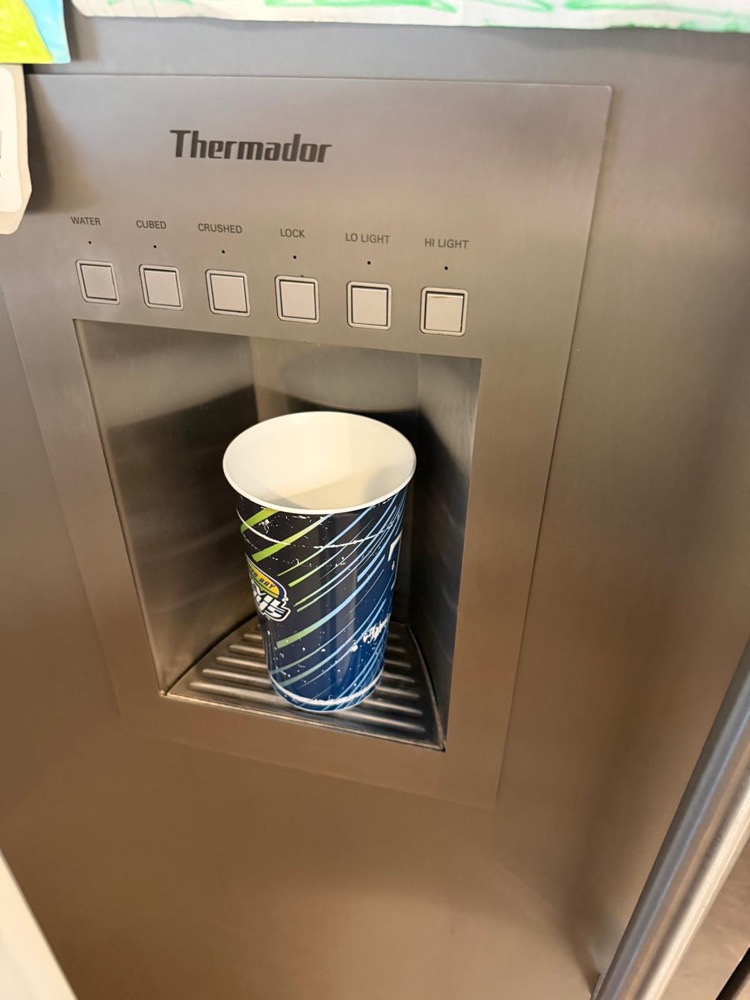
All major brands: Sub-Zero, LG, Samsung, Whirlpool, KitchenAid, GE and GE Café, Frigidaire, Electrolux, Bosch, Maytag, Thermador, Viking, Monogram, Café and more. We are an independent repair company — we service these refrigerators, we are not affiliated with or authorised by any manufacturer, and we will tell you plainly when a factory warranty covers something we would otherwise charge for.
Do you warranty the repair? +
It depends on the refrigerator. A standard repair — LG, Samsung, Whirlpool, GE, Maytag, Frigidaire, KitchenAid, Bosch — carries a 90-day labor warranty. Premium built-in refrigeration, meaning Sub-Zero, Wolf, Viking, Thermador, Monogram and Miele, carries a 12-month parts and labor warranty. Parts also carry their own manufacturer warranty on top of ours. Full detail on the warranty page.