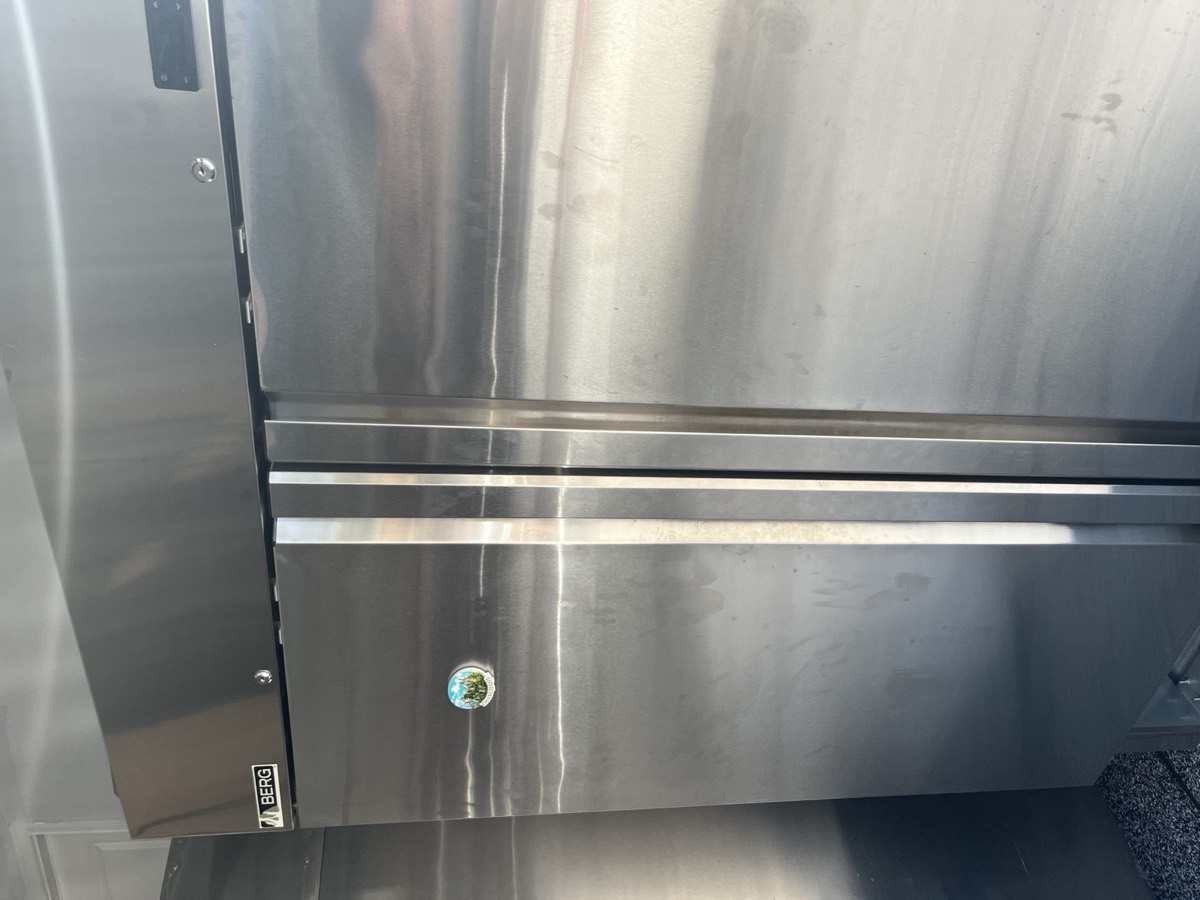
Your glass-door merchandiser isn't just storage — it's part of your sales floor. When customers see foggy glass, warm drinks, frost buildup, or water on the floor, they lose confidence before they even open the door.
We diagnose commercial glass-door refrigerators and freezers for Tampa Bay stores, restaurants, bars, cafés, churches, markets, and food-service operators. No guessing. We test the system, explain the real failure, and give you a clear repair option before any work starts.
If you're searching for glass-door refrigerator and freezer repair near me, or you need a technician who actually understands the failure patterns of commercial merchandisers, you're in the right place.
Here's what that gets you: a diagnostic fee that comes 100% off the repair once you approve it, a same-day appointment when you call before 2 PM, direct contact with the technician who does the work, and full commercial compliance — licensed, insured, and EPA-certified.
Service areas: Tampa, South Tampa, Wesley Chapel, and Dade City.
Glass-door merchandiser problems we fix every week
Glass-door units look simple until you factor in Florida's heat, humidity, constant door traffic, grease-laden air, and dirty condenser coils. These units work harder here than in almost any other climate. Here are the failures we see most.
Not cooling or not cold enough
The unit is running — you can hear the compressor cycling — but product temps are climbing above safe range. This is the number-one call we get on glass-door merchandisers. The usual root causes are a condenser coil packed with grease and dust (by far the most common trigger), a failing condenser or evaporator fan motor, restricted airflow from poor positioning or blocked vents, a refrigerant issue on older units, or a control board misreading its sensors. A merchandiser sitting near a cook line, a front entrance, or a south-facing window absorbs far more ambient heat, and the system has to reject all of it through the condenser. If that coil is even partly blocked, it can't keep up. What looks like a major failure is often a coil cleaning and airflow correction on the lower end of the price range — when it's caught early.
Fogging and heavy condensation on the glass
Customers can't see your product. The doors sweat, drip, and create a visual mess that hurts sales. This one hits Florida harder than almost anywhere in the country. Fogging is usually an anti-sweat heater problem — the thin heating element in the door frame that keeps condensation from forming. When it fails, the gap between the cold interior and Florida's humid air creates persistent fog. Worn door gaskets, a door heat-circuit malfunction, or restricted airflow inside the cabinet can cause it too. This isn't cosmetic. It means the unit is losing a humidity battle and working harder than it should.
Ice buildup on the evaporator coil (freezers)
A wall of ice forms on the evaporator, airflow drops to almost nothing, and the freezer can't hold temp. This is the defining failure of glass-door freezers in Florida — especially high-traffic units in convenience stores, gas stations, and liquor stores where the doors open constantly. The defrost system — heater, termination sensor, and timer or control-board logic — is what periodically melts frost off the coil. When any part of that chain fails, ice accumulates with every cycle. A door gasket leak makes it far worse, because humid air enters with every opening and freezes on contact. Proper diagnosis means testing all three defrost components plus the door seal — not just replacing the heater and hoping.
Water on the floor or drain pan overflow
A puddle near or under the unit is a slip hazard, a health-inspection flag, and a sign of a drainage or condensation problem. The usual causes are a blocked drain line (from food debris, mold, or mineral buildup in Tampa's hard water), cracked drain tubing, or a misaligned drain pan. On freezers, a failed defrost cycle can also dump more melt water than the drain was built to handle at once. A small puddle can mean a clogged drain, a failed pan heater, humidity overload, a gasket leak, or a defrost issue — and in a store or restaurant it becomes a slip risk fast.
Short cycling or noisy operation
The compressor kicks on and off rapidly instead of running steady cycles, or you hear buzzing, clicking, or grinding from inside the unit. Short cycling stresses the compressor and drives up energy costs. Common causes are failing start components — relay, capacitor, or overload — high head pressure from a dirty condenser, a pressure-switch issue, or a fan motor with worn bearings. Left alone, short cycling can kill a compressor that was otherwise healthy, turning a modest repair into a full compressor replacement.
Lights on, unit won't cool
The display is lit and the lights are on, but nothing is cooling. That usually points to a control or relay failure, a tripped thermal overload, surge damage from a power spike, or a wiring problem. In Tampa Bay's lightning-heavy storm season, surge damage to control boards and relays is a regular occurrence. A proper electrical stress scan finds the failed component instead of replacing parts blindly. Lights on doesn't mean cooling is working — if the display is lit but the product is warm, the problem may be electrical, compressor-related, control-related, or airflow-related. We test before quoting parts.
Stop the frost before it spreads. Find the leak source today. Request service for a no-cooling problem today. (813) 522-0014
Brands we service, and why True and Turbo Air lead the category
We specialize in the glass-door merchandiser brands most common in Tampa Bay commercial locations.
True Refrigeration — the industry benchmark
After years of working on these units across Tampa Bay, True is the benchmark in the glass-door category. Models like the TS-49G-HC and T-23G-HC are the ones I see lasting the longest and needing the least dramatic repairs. The stainless-steel construction holds up in Florida's corrosion-prone environment, where salt air and humidity destroy cheaper cabinets over time. Many current models run on R-290 refrigerant, which tends to run more efficiently in high-ambient conditions — and that matters in a Florida retail space where the temperature near the unit can push past 80°F during peak hours. True units hold steady temperatures in the 33°F range with reliable cycling under real-world door traffic and product loading, which is exactly what food safety depends on. And when one does need repair, parts are widely available, the systems are laid out for service access, and most failures fall into predictable patterns — which means faster diagnosis, lower repair costs, and less downtime.
Turbo Air — Florida-ready engineering
Turbo Air glass-door freezers and refrigerators are what I recommend when an operator needs equipment built to fight Florida's environment. The TGF and TSF series — especially the TSF-23GSD-N — are engineered around the problems I repair most often here. The self-cleaning condenser is a genuine advantage: a dirty condenser is the number-one cause of not-cooling calls, and while the system doesn't replace professional maintenance, it stretches the interval between cleanings and reduces surprise failures during business hours. The heated triple-pane glass is the most effective answer to fogging in a state where humidity regularly tops 80%, and it's field-proven across hundreds of Tampa Bay installations. The freezer range down to -10°F gives operators a safety buffer, so even during heavy door traffic in a busy convenience store the unit has the capacity to recover quickly.
Koolmore — practical for cafés and small retail
Koolmore's 12- to 21-cubic-foot models with auto-defrost and digital controls serve a specific niche well: cafés, bakeries, small retail, and low-to-medium-traffic locations. They aren't built to the same spec as True or Turbo Air, but for lighter demand they deliver acceptable performance at a lower cost. Double-pane glass helps reduce fogging and energy use, and the digital controls are simple enough for staff to manage without training. A straight note from the field: Koolmore units are less forgiving under heavy load or neglected maintenance. Run one in a high-traffic location without regular condenser cleaning and you'll see cooling problems sooner than you would with a True or Turbo Air. For the right application, and paired with a preventive schedule, they're a smart budget-conscious choice.
True, Turbo Air, Koolmore, or another glass-door fridge acting up? Different brands fail in different ways. Some struggle with door heaters and condensation. Some lose airflow from dirty coils. Some use R-290 systems that require careful service. We diagnose the equipment you actually have — not a generic "commercial fridge" problem.
Fix my brand and model today — (813) 522-0014
Our 7-point glass-door inspection
This is how we stop repeat breakdowns and catch failures before they cost you product. It's built for the conditions glass-door merchandisers face in Florida: high ambient heat, extreme humidity, constant door traffic, and power instability from storm activity. Every glass-door diagnostic includes the full inspection.
Condenser and airflow check
Coil condition, airflow restriction, and fan motor performance and amp draw. A condenser coil in a Tampa Bay kitchen or retail space can go from clean to more than 50% blocked in 60 to 90 days. We measure actual airflow rather than eyeball it.
Temperature and cycling verification
We measure actual product-zone temperatures with calibrated instruments, not just the controller display, and check how often the compressor runs, how long, and whether it reaches target temp between cycles. A display reading 35°F means nothing if the product zone is sitting at 44°F.
Defrost system test (freezers)
Heater continuity, termination sensor resistance, and timer or control-board defrost logic — every component in the chain tested independently. In Florida, defrost failures are the primary killer of glass-door freezers because humidity amplifies ice accumulation.
Door seals and alignment
Gasket compression test, door-close force, hinge condition, and frame alignment. A gasket that looks fine can still leak enough humid air to cause fogging, ice buildup, and a 10 to 15% jump in energy use. We test actual seal performance, not appearance.
Anti-sweat and door heat circuit
Heater continuity, mullion heater function, and the balance between anti-sweat heating and refrigeration load. A failed anti-sweat heater means fogging; one stuck on makes the refrigeration system fight against it and run harder than it needs to. Both cost the operator money.
Drain and condensate management
Drain-line flow, pan condition, condensation routing, and potential overflow points. Florida's humidity generates more condensation than most drain systems were designed for, so we check the full path from the evaporator drain to final discharge.
Electrical stress scan
Relay and contactor condition, start-component health, wiring hot spots, and corrosion indicators. Tampa Bay's lightning makes electrical stress a recurring factor, and we check for surge evidence that other technicians routinely miss.
Don't pay for a guess. Get a display-ready diagnosis: (813) 522-0014
Quarterly condenser cleaning and performance check
For operators running glass-door merchandisers in restaurants, gas stations, convenience stores, liquor stores, and cafés, a quarterly preventive maintenance program is the most cost-effective investment you can make in your equipment. We set the schedule and scope around your specific environment, traffic volume, and equipment age.
This program prevents most of the emergency calls we see and extends the working life of your merchandiser by years, not months. Ask about multi-unit pricing when you call.
Your glass-door cooler has two jobs: stay cold and sell product. When it runs warm, fogs up, leaks, or builds frost, it fails at both. We help Tampa Bay businesses restore cooling performance, product visibility, and customer confidence — without pushing replacement when repair makes sense.
Keep My Display Cold and Clear — (813) 522-0014
What a glass-door case really costs to ignore
Two numbers every operator should know. First, the market: Ubersuggest counts about 1,000 U.S. searches a month for commercial glass door refrigerators, peaking each September and March — new stores opening and old cases dying at season change. Second, the physics: a glass door is the worst-insulated wall a refrigerator can have, which is why these cases live or die by their door gaskets and anti-sweat heaters. A flattened gasket on one door makes the compressor run extra hours every single day — you pay for that twice, in kilowatt-hours and in compressor life. The cheapest repair on a merchandiser is almost always the gasket you have been ignoring, and the most expensive one is the compressor that ignored gasket eventually kills.
Search data: Ubersuggest, national monthly volume, last 12 months. The September and March peaks track store openings and season change — book gasket-and-coil service before them, not after.
Pricing: realistic ranges after diagnosis
We keep pricing transparent. These are common ranges we see after a proper diagnosis on glass-door refrigerator and freezer repairs. Parts and labor vary by model, access, and urgency, and you always get a written estimate before we proceed.
Your glass-door cooler is part of your customer experience. If the bottles are warm, the glass is foggy, or the unit is noisy near the counter, it reflects on your business. Get my front cooler back to normal temp today — (813) 522-0014
Real service cases from Tampa Bay locations
Turbo Air glass-door freezer — ice wall on the evaporator (Wesley Chapel)
A convenience-store operator reported temps drifting above 0°F, a visible ice wall on the evaporator coil, and reduced airflow through the product shelves. The unit was a Turbo Air TSF series in a high-traffic spot near the entrance. Our 7-point inspection found a failed defrost termination sensor — the heater was cycling, but the sensor never signaled "defrost complete," so cycles finished incomplete. Compounding it, the left-panel door gasket had lost compression, letting humid Florida air in to accelerate the frost. We replaced the termination sensor, ran a manual defrost to clear the ice, replaced the gasket, verified the defrost logic, and monitored temp stability for 45 minutes. Temps held at -5°F through a full business day, and we showed the operator how to spot early frost before it becomes a full ice wall.
True glass-door merchandiser — running warm, compressor working hard (South Tampa)
A restaurant bar manager noticed product not holding temp in a True TS-49G-HC positioned near the kitchen pass. The compressor ran almost continuously, and the display read 38°F while the product felt warm. A calibrated thermometer confirmed the actual product-zone temp at 46°F — eight degrees above the display. The condenser coil was more than 70% blocked with grease and airborne kitchen debris, and the fan was running but moving too little air through it. The sensor was reading accurately; the system simply couldn't reject enough heat. We deep-cleaned the condenser, restored the airflow path, recalibrated the sensor to the verified temperature, and confirmed cycling under simulated load. Product-zone temps came back to 36°F within 90 minutes, and the operator enrolled in a quarterly condenser-cleaning program given the kitchen proximity.
Dual-section glass-door unit — foggy doors and water dripping (Tampa)
A liquor-store owner reported persistent fogging, condensation dripping onto the floor near the front, and customers unable to see product clearly. The unit sat in a high-traffic spot near the entrance. The anti-sweat heater on the right door section had failed — zero continuity across the element — and that section's gasket was showing early wear, creating a second humidity path. The drain line was partly clogged with mineral buildup from Tampa's hard water, overflowing the pan during peak humidity. We replaced the anti-sweat heater and the gasket, cleared and flushed the drain line, inspected and realigned the pan, and observed the unit under normal store conditions to confirm fog-free operation. The result was clear glass, no floor water, and a noticeably quieter unit that was no longer fighting constant humidity.
If your glass-door refrigerator is used for drinks, meals, events, or donations, don't wait until the next event to find out it isn't holding temperature.
Schedule a fridge-cooler check today
(813) 522-0014Frequently asked questions
We service prep tables too
If you run a kitchen line, your glass-door merchandiser isn't the only refrigeration asset that needs a reliable technician. Prep tables are the quiet heroes of every line setup, and when they go down, the kitchen slows down fast. Across Tampa Bay kitchens, Atosa, Arctic Air, Avantco, and Randell are among the best workhorse prep tables, because they offer three things that matter on the line: mobility on casters for repositioning and service access, versatility across pizza, sandwich, salad, and catering setups, and the plain fact that there's no workaround when a cold rail goes warm mid-service. See our prep table repair page for service details, pricing, and Tampa Bay case studies.
Related commercial refrigeration services: walk-in cooler and freezer repair and under-counter refrigeration repair.
Service areas
We serve Tampa, South Tampa, Wesley Chapel, Dade City, and Zephyrhills for commercial glass-door unit repair. If you're near the edge of that radius, call or text (813) 522-0014 and we'll confirm coverage and availability.
Perfect Appliance Repair Tampa — Glass-Door Refrigerator and Freezer Repair. Call or text (813) 522-0014.
— We Stand Behind Our Work —