
The short version: if your washer is leaking, the water is coming from one of about seven places, and where the puddle sits — front, back, underneath — plus when it appears — fill, wash, drain or spin — narrows it to one or two parts before anyone touches a screwdriver. Front-load washers leak mostly from the door boot and the drain pump filter; top-load washers mostly from hoses, the tub seal and overfilling. A leak that shows up only while the machine drains may not be the washer at all. Below is how I work a leaking washer on my Tampa Bay calls, in the order that saves the most money.
Start with the puddle: where the water is tells you what failed
Before I open a cabinet I want two facts from you: where the water is, and what the machine was doing when it appeared. Put down dry towels or a flattened cardboard box, run a small empty cycle, and look at each stage. Water on the floor in front during a spin is a different fault from water behind the washer during a fill.
| Where the water is | When it shows up | Most likely cause |
|---|---|---|
| In front of the machine | During the wash or spin | Front-load door boot (gasket); dispenser drawer overflow; suds |
| In front, low, near the small access door | After a drain | Drain pump filter cap not seated, cracked filter housing |
| Behind the machine | During fill | Inlet (fill) hose washers, cracked hose, inlet valve body |
| Behind the machine | During drain only | Drain hose split, hose popped out, standpipe overflowing (plumbing) |
| Underneath, spreading from the middle | During spin, with a rumble | Tub bearing seal (front-load) or tub seal (top-load) |
| Underneath, from the pump area | Every drain | Tub-to-pump hose, loose spring clamp, cracked pump housing |
| Over the top or out the lid | End of fill | Water level (pressure) switch overfilling; blocked air hose |
One caveat: water runs downhill along the cabinet base, so a leak that starts at the top-back can appear at the front-left. The table gets you to the right neighborhood; the flashlight finishes the job.
Five checks before you call anyone
These cost nothing, and any one of them can end the problem. Do them in order.
- Hand-tighten the fill hoses at both ends. Wall valve and the inlet on the back of the washer. If a fitting was dripping, the rubber washer inside it is probably flattened; a new pair of washers is a hardware-store part.
- Inspect the drain hose. It should sit in the standpipe or drain box by a few inches and be clipped so it cannot jump out on the drain surge. A cracked corrugated drain hose sprays a fine mist you only notice as a puddle later.
- Pull back the door boot (front-load) and clean the folds. Socks, hair ties and a pen cap sitting in the bottom fold hold the seal open. Wipe the inner lip and the glass; check the boot for a tear or a hard, glazed patch.
- Open the drain pump filter (front-load, small door at bottom front). Pan and towels ready. Unscrew the cap, clear the coins and lint, and screw it back until it seats firmly — a cap one turn short leaks on every drain.
- Cut the detergent in half for two loads. If the puddle is foamy and the leak stops, you had a suds problem, not a broken washer. More on that below.
If the leak survives all five, something inside has failed and it is worth knowing which part before you decide what to do about the machine.
Front-load leaks: the door boot, the pump filter and the seal you cannot see
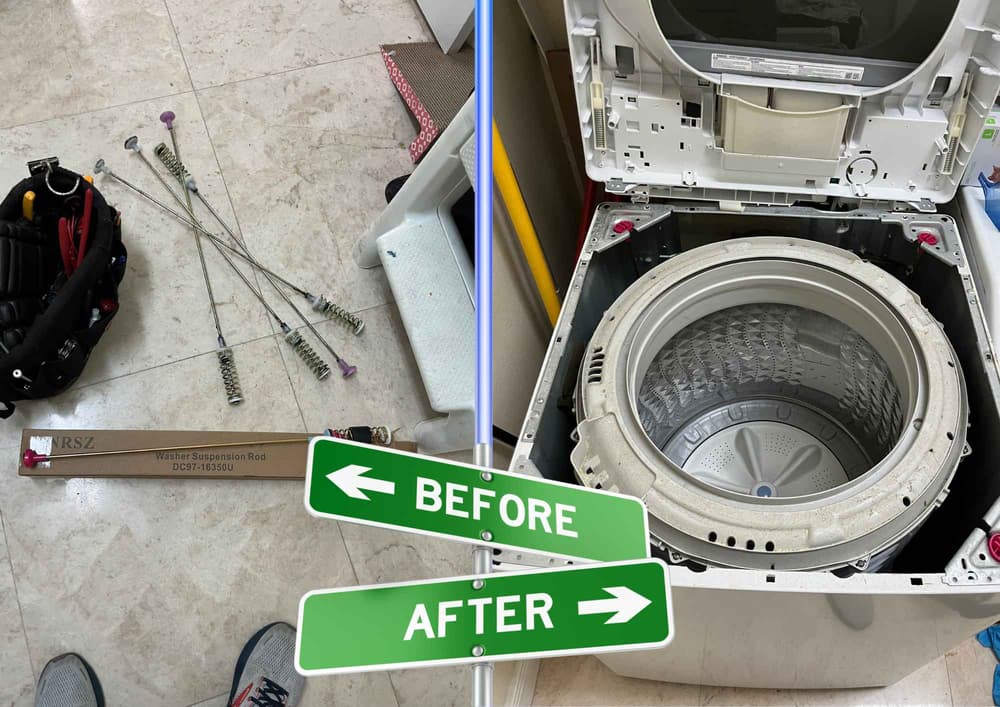
The door boot (gasket). That thick rubber bellows between the door and the outer tub is the number-one leak source on a front load washer. It fails three ways: a tear from a zipper or an underwire, a hard, cracked patch from years of hot water and detergent, or a fold that simply will not seat because of buildup and will allow water past the glass on spin. On most LG, Samsung, Whirlpool, GE and Electrolux front-loaders the boot is held by two clamps; replacing it is a routine job, though on some models the front panel has to come off to reach the inner clamp. Cleaning slows the decline. It does not fix a torn boot.
The drain pump filter housing and hoses. Under the tub, the water leaves through a large hose into the pump filter housing, through the pump, and out the drain hose. Every joint has a spring clamp or a screw clamp. A clamp that has lost tension, a housing cracked by a coin that got jammed in the impeller, or a filter cap with a chewed gasket all drip in the same spot — bottom front.
The tub bearing seal. This is the one I would rather tell you about honestly than sell you. The inner drum rides on two bearings at the back of the outer tub, protected by a lip seal. When the seal wears, water reaches the bearings, the bearings rust and get loud, and the water starts coming out the back of the tub and pooling underneath. The tell is a leak from the middle-bottom plus a rumble or roar on spin. On a front-loader that is ten-plus years old this job means splitting the outer tub — hours of labor, sometimes a whole tub assembly — and I usually advise putting that money toward a new machine. I explain the full math in is it worth fixing a washing machine.
The dispenser. A clogged siphon cap in the detergent drawer sends water out the front of the drawer instead of into the tub. Pull the drawer, pop the caps, rinse under hot water. Five minutes, no parts.
Top-load leaks: hoses, the tub seal and a machine that fills too high
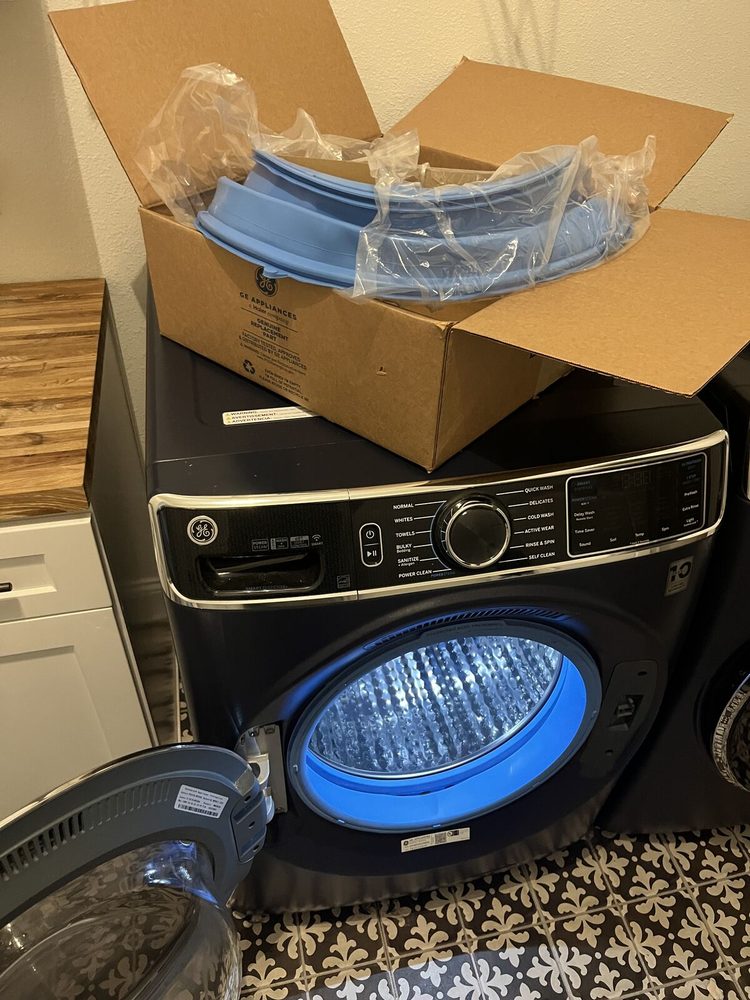
A top load washer has no door boot, so its leaks come from below and behind. The tub seal sits where the drive shaft passes through the bottom of the outer tub. When it wears, water follows the shaft down onto the transmission or the motor and ends up on the floor as a spreading wet patch under the middle of the machine, usually worst during agitation and spin. On older direct-drive Whirlpool and Kenmore machines it is a known wear item; on newer HE top-loaders the seal and bearing come as one assembly and the tub has to come out to reach it.
Pump and hoses. Same idea as a front-loader: a tub-to-pump hose with a soft spot, a spring clamp that has relaxed, or a pump body cracked around the impeller. These leak on every drain and never on fill.
Overfilling. The washer knows its water level from a pressure switch (an air dome and a hose, or an electronic sensor on the board). If the air hose is pinched, cracked or has a blob of detergent in it, the switch never sees full, and that can cause water to come over the top of the tub rim. A slow inlet valve that does not close fully does the same thing more quietly — you find the tub full in the morning when the washer has been off all night. That is a water inlet valve, not a level switch, and I test for it by shutting the supply valves and watching whether the tub still rises.
A cracked outer tub. Rare — years of an off-balance basket, or a bra wire through the plastic. Leak on spin, nothing on fill. Nearly always a replace-the-washer finding, and I will say so.
Hoses, clamps and the drain standpipe: the leaks that are not really the washer
Inlet hoses. Plain rubber fill hoses are supposed to be swapped every five years or so; almost nobody does it. In Florida, where municipal water pressure in some neighborhoods runs high and a garage laundry bakes the rubber, a bulge near the crimp is a warning, not a curiosity. Stainless-braided hoses cost a little more and fail far more gracefully. The leak is nearly always at the crimped end or the rubber washer, not the middle of the hose.
The drain standpipe. Here is the leak that costs people a service call they did not need. Modern washers pump out fast; an older 1½-inch standpipe or a drain line with a partial clog of lint and detergent sludge cannot swallow the water that quickly, so it backs up and spills over the top of the pipe, behind the washer, exactly where a drain hose leak would appear. The clue: it only happens at the end of a drain, the water is soapy, and the standpipe gurgles. That is a plumber's job. If I find it on a visit I will tell you, and you will keep your repair money.
The drain hose itself. Corrugated plastic gets brittle. A hose that has been kinked behind the washer for years splits at the fold. If it is pushed too far down the standpipe it can siphon; if it is not clipped, the first drain surge can lift it right out.
Too much detergent: the leak that comes out of a bottle
High-efficiency washers use a fraction of the water an old agitator machine did, and the detergent dose shrank with it. Pour a full cap of regular detergent into an HE front-loader and the tub fills with foam that has nowhere to go but past the door boot lip and out the dispenser vent. The puddle is white and slippery, the inside of the cabinet is dry, and the machine is fine. The same overdose feeds the black film in the boot folds that eventually ruins the gasket.
The fix is the least glamorous in appliance repair: HE detergent, the smallest line on the cap, and a hot empty cycle with a washer cleaner once a month. Suds are not a sign of clean; they are soap that is still in the drum.
The Tampa Bay angle: hard water, high pressure and a laundry room in the garage
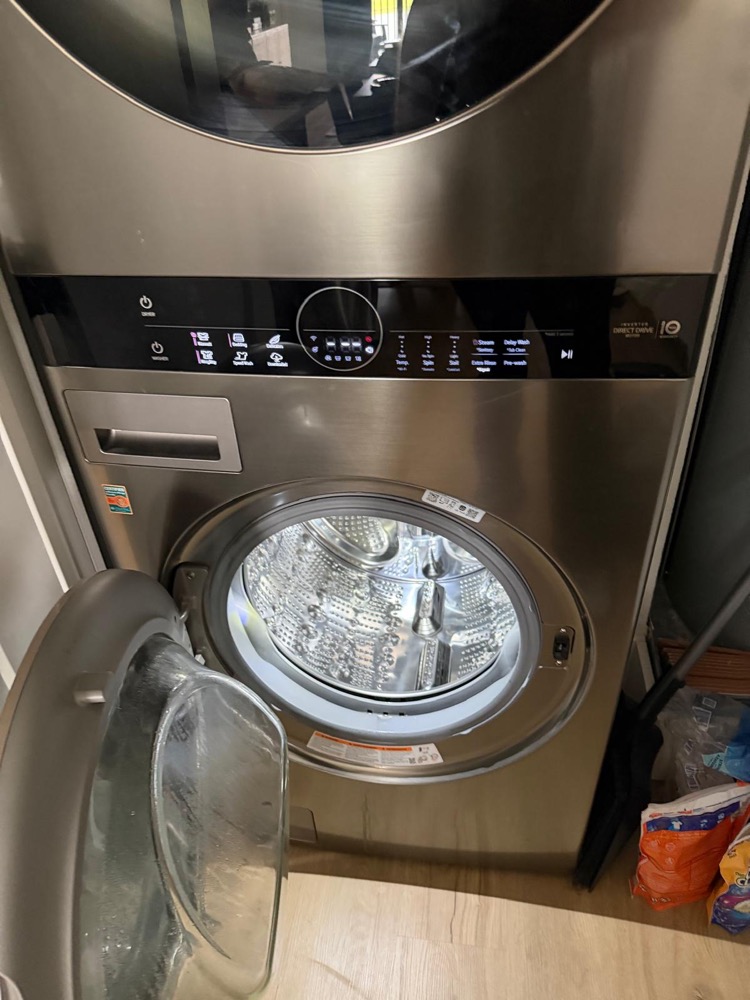
Three local facts change what fails here. First, the water here is hard, and scale builds up in the inlet valve body and the pressure-switch air path; a valve that cannot seat fully because of mineral grit is how a "washer fills by itself overnight" call starts. Second, a lot of Tampa Bay laundry rooms are in garages or on second floors of newer two-story homes. A garage cooks rubber hoses and boots; a second-floor laundry turns a small leak into a ceiling repair below, so I push for a drain pan and braided hoses upstairs. Third, salt air near the coast, from Apollo Beach to Clearwater, rusts spring clamps and pump screws faster than inland, and a rusted clamp loses its grip.
None of that is a reason to fear your washer. It is a reason to look behind it once a year, which most people do about as often as they defrost a chest freezer.
Repair or replace: the leak math, honestly
Most leaks are at the cheap end of washer repair: hoses, washers, clamps, a filter cap, a dispenser siphon, a drain pump or a door boot. On any machine that otherwise works, those are worth doing. The decision changes at two parts. A tub bearing seal on a front-loader (and the bearing-and-seal assembly on HE top-loaders) is several hours of labor plus parts; on a machine past ten years I usually recommend replacement, and I will tell you that at the diagnostic rather than after the tub is in pieces. A cracked outer tub is nearly always a replace. The $69 diagnostic fee is applied 100% to the repair you approve, and the repair carries a 90-day labor warranty. For the broader framework, see the repair-or-replace guide; if your washer is also holding water, read washing machine not draining, because a drain fault and a leak often share one clogged pump.
How common is this? Search demand, measured
Ubersuggest counts roughly 1,900 U.S. searches a month for "washer leaking water," and the 12-month curve is nearly flat with a late-summer and holiday-season bump. Hoses and boots wear at the same rate in May and December, so there is no season to wait out.
Search data: Ubersuggest, national monthly volume, last 12 months. The bump from late summer into January lines up with holiday laundry volume; the dip in May and June is the quietest stretch. If your washer drips in June, you are ahead of the queue.
Expert opinion — Anatoli Didenco, owner, Perfect Appliance Repair Tampa. Rule of thumb: a leak on fill is a hose or a valve, a leak on drain is a pump, a clamp or your plumbing, and a leak on spin is a seal — the door boot on a front-loader, the tub seal underneath on a top-loader. Fill and drain leaks are almost always worth fixing. A spin leak with a rumble on a ten-year-old front-loader is the one where I tell you to shop instead, because the bearing job costs more than the machine is worth.
Before you let anyone open your washer
BBB Accredited, A+ rated, and more than 200 five-star reviews across major platforms. Read what owners actually say on the reviews page — Google and BBB, in their own words.
And the honest part: if tightening the hoses, cleaning the boot and seating the filter cap stopped the drip, you don't need me. Buy braided hoses with the money and call it a good day.
Washer leaking water — quick answers
Why is water leaking from underneath my washing machine?
On a front-load washer, water under the machine is usually the door boot draining down the inside of the cabinet, a loose drain pump filter cap, a cracked tub-to-pump hose, or the tub bearing seal. On a top-load washer it is most often the tub seal or a pump hose clamp. Run an empty rinse and watch which stage the water appears in.
Can I still use my washing machine if it is leaking?
A slow drip from a hose fitting, yes, for a load or two while you sort it out. Water pooling under the cabinet, no. It reaches the motor, the pump wiring and the floor, and a bearing leak gets worse with every spin. Shut the supply valves and stop running it until the source is found.
Why is my washer leaking brown or dirty water from the bottom?
Brown, gritty water is coming out of the tub, not the supply hoses. That points to the drain path: the pump filter housing, the tub-to-pump hose, or a tub seal. Rust-colored water with a rumble on spin on a front-loader is the classic bearing seal failure.
Why does my washer only leak during the spin cycle?
Spin pushes water hard against the door boot on a front-loader and against the tub seal on a top-loader, and it drives water out through any crack in the outer tub. Leaks that show up only on spin are almost never the inlet side.
Can too much detergent make my washer leak?
Yes. On high-efficiency machines a thick layer of suds rides up past the door seal or out the dispenser and ends up on the floor. If the puddle is foamy and the machine is otherwise dry inside the cabinet, cut the detergent to the HE dose first.
Is the leak my washer or my plumbing?
If water appears behind the machine only while it drains, and the standpipe gurgles or overflows, that is a house drain problem, not the washer. If the puddle appears during fill or during spin, the washer is the suspect.
Is a leaking washer worth repairing?
Hoses, clamps, a door boot, a pump filter housing or a drain pump are worth fixing on almost any machine. A tub bearing seal on a front-loader past ten years usually is not, because the job means splitting the tub and the labor lands near the price of a new machine.
Related services
Book same-day service or read more about the exact repair:
- Washer repair
- Washing machine not draining
- Is it worth fixing a washing machine?
- Washer shaking violently
- LG appliance repair
- Whirlpool appliance repair
Call or text (813) 522-0014 or book online — Perfect Appliance Repair Tampa covers Tampa, South Tampa, Wesley Chapel, Zephyrhills, Dade City, and surrounding Tampa Bay.
Anatoli Didenco is the owner-technician of Perfect Appliance Repair Tampa, with 20+ years of hands-on technical experience in refrigeration and appliance repair across Hillsborough, Pinellas, and Pasco Counties. He specializes in refrigerators — particularly Sub-Zero, Wolf, and premium built-in systems — and sealed-system and compressor work. He answers the phone, and either he or Nick, his technician, shows up at the door. Read more on the About page.
Perfect Appliance Repair Tampa serves Tampa, South Tampa, Wesley Chapel, Zephyrhills, Dade City, and the surrounding Tampa Bay area. Reviews are available on the company’s Google Business Profile and BBB listing.
We Stand Behind Our Work.