
The short version
Most dryers are worth repairing well past 10 years, because most dryer failures are a cheap part behind a panel: thermal fuse, heating element, igniter, belt, roller, thermostat. A dryer becomes a replacement candidate when an expensive part fails on an old machine, when it needs its second repair in a year, or when the drum or cabinet is physically done. And before deciding anything, check the vent: a restricted vent fakes a dying dryer better than any real fault.
How long a dryer is supposed to last
The number quoted across the industry is about 13 years, and it's the same for electric and gas. Averages hide the two things that actually decide it: how many loads a week, and whether the air can get out. A dryer in a two-person condo can go 20 years. A dryer for a family of five on a long vent through a hot attic works twice as hard per load and ages accordingly.
Age alone never tells me to replace a dryer. Age plus what failed does. A 12-year-old dryer with a blown thermal fuse is a 12-year-old dryer with a cheap safety part in it, not a lost cause. So the next two sections answer the "what broke" question first.
The cheap fixes: what usually breaks on a dryer
A dryer is a drum, a motor, a heat source, a blower, and a handful of safety switches. Compared with a refrigerator's sealed system, very little inside costs real money. These are the parts I replace most, and each comes out through the front or rear panel:
- Thermal fuse. A one-shot safety on the blower housing (electric) or the burner (gas). When exhaust air gets too hot it opens, and the dryer loses heat or goes completely dead. Cheap part, quick swap. The catch: it rarely blows for no reason. Usually the vent is restricted, and if the vent isn't fixed the new fuse blows too.
- Heating element (electric). A coil of resistance wire in a metal housing. It burns open, the drum turns but the air stays cool. The most common reason for a dryer not heating.
- Igniter, flame sensor and gas valve coils (gas). The gas-dryer equivalents. A flame that lights and drops out a few minutes in is usually the valve coils. All modest parts.
- Drum belt. One long belt around the drum, the motor pulley and the idler. When it snaps, the motor hums and the drum sits still. Cheap, fast.
- Drum rollers and idler pulley. The drum rides on rollers; the idler keeps the belt tight. Worn bearings give you the thumping and squealing covered in dryer making noise. Rollers get replaced in pairs.
- Cycling and high-limit thermostats. Small discs that switch the heat on and off. A failed one gives you no heat, or heat that never cycles. Inexpensive.
All six pass the 50% rule on any structurally sound dryer, at any age. If someone tells you to replace a 9-year-old dryer over a belt, get a second opinion.
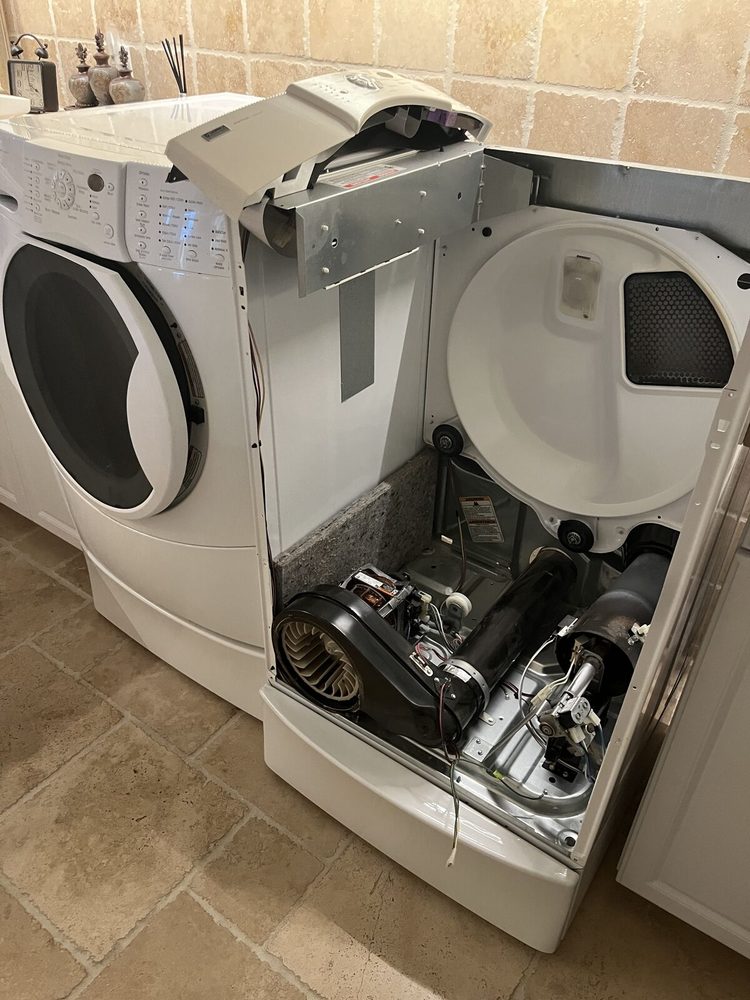
The expensive fixes: where the math gets real
A short list, but these are the failures that make me pull out the calculator with you:
- Drive motor. The one part that costs real money on a basic dryer. It fails as a hum with no drum movement while the belt is fine, or as a motor that runs hot and shuts off. On a 5-year-old dryer, replace it without a second thought. On a 14-year-old dryer, it's a judgment call.
- Drum. Drums crack at the weld seam or the rear bearing hub: a periodic clank, then snagged clothes. A big, expensive part, and by the time the seam lets go the rollers, glides and felt seals are tired too. Close to an automatic replace on any dryer past 8 years.
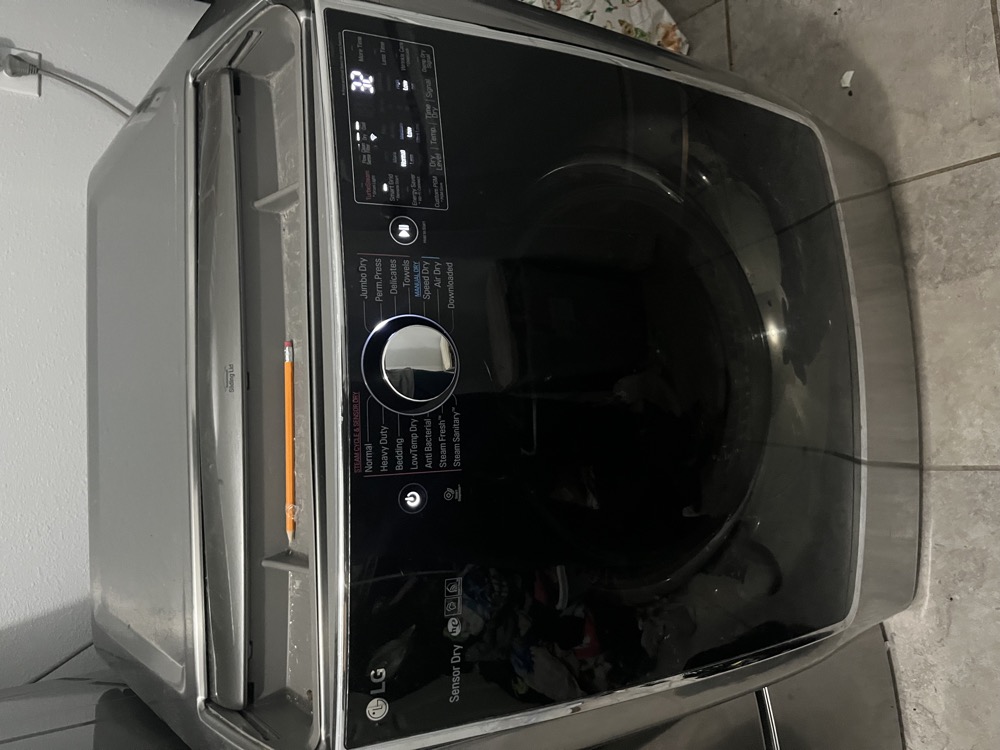
- Control board on high-end models. A mechanical-timer dryer has no board to fail. A steam or smart dryer with a touch panel has a main board and often a display board, and on LG, Samsung and premium Whirlpool or Maytag models those parts are priced like they belong in a refrigerator. Storm surges are the usual killer, and Tampa Bay gets more lightning than almost anywhere in the country.
- Gas valve assembly. Not the coils, the whole valve. Rare, and usually still worth doing because gas dryers cost more to replace.
Three of the four are rare. Most dryers reach the end of their lives without needing any of them, which is why dryer repair is usually the short, cheap kind.
The vent trap: a restricted duct fakes a dying dryer
If I could print one sentence on every dryer's control panel: a dryer that takes two cycles to dry a load is almost never a bad dryer. A dryer moves hot, wet air out through the vent. When that path narrows, the clothes stay damp, the heater runs longer, the thermal fuse and high-limit thermostat trip, and the element or motor wears out early from doing double shifts. Every symptom of a "dying" dryer, from one restricted duct.
Tampa Bay makes it worse: vents run long through hot attics to a roof cap, humidity packs the lint tighter, and the foil duct behind the dryer gets crushed when the machine is pushed to the wall. The quick test: run the dryer on high heat and hold your hand at the outside vent hood. You want a strong, warm push of air, like a hair dryer. Weak, cool, or nothing, and the vent is the problem, not the dryer. I check airflow before I quote any part, because a thermal fuse replaced on a blocked vent is a repair that fails in three weeks.
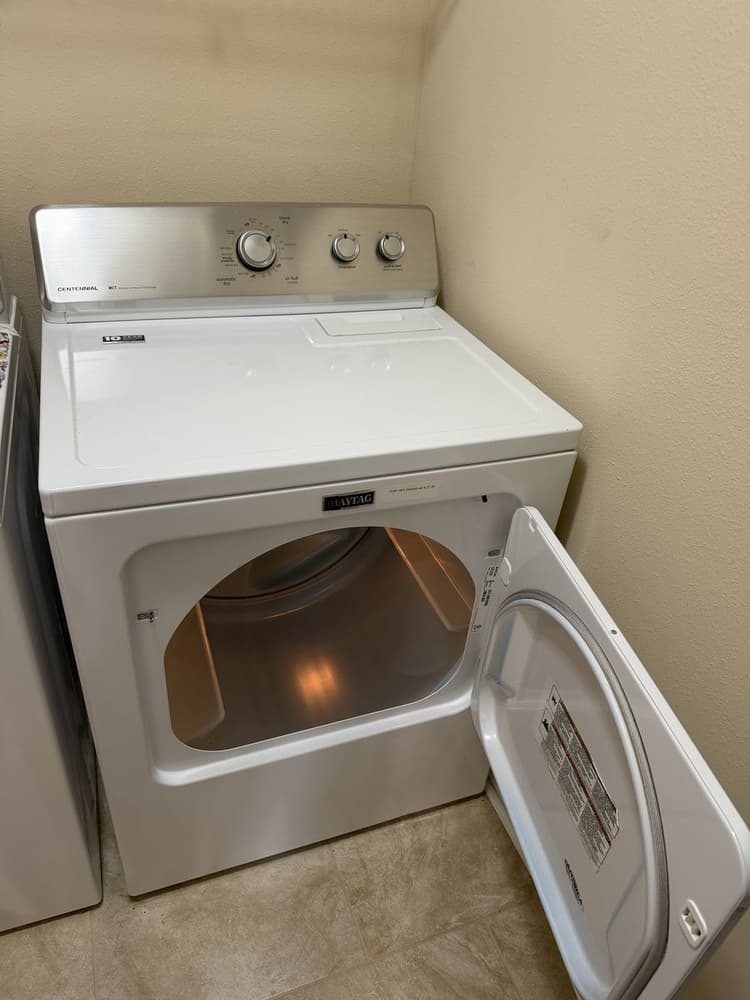
The honest math at 5, 10 and 15 years
The 50% rule is the usual benchmark: repair if the fix costs less than half of a comparable new dryer. A fine starting point and a poor stopping point, because it ignores what's likely to fail next and whether a new dryer would even fit your hookup. Here's how I think about it by age:
| Dryer age | Cheap fix (fuse, element, igniter, belt, rollers, thermostat) | Expensive fix (motor, drum, board) |
|---|---|---|
| About 5 years | Repair, every time. | Repair. Even a motor is far under 50%. |
| About 10 years | Repair. Also fix the vent, or you'll be doing this again. | Motor: usually repair. Drum or board: run the numbers; second repair, lean replace. |
| About 15 years | Usually still repair, if the drum is sound and it's the first failure. | Replace, with rare exceptions (gas, or a stacked unit where replacement is a project). |
Gas vs electric. Gas dryers cost more new, their common failures are cheap, and the gas line limits what you can swap in, so they earn a longer repair window. Electric dryers are cheaper to replace, which lowers the 50% bar.
The energy argument. A new dryer will not pay for itself in electricity. A dryer's energy use is almost all the heating element, and a 15-year-old element draws roughly what a new one draws. ENERGY STAR certified dryers use about 20% less energy than standard models, mostly through moisture sensing, and on a household dryer bill that's a slow payback. Replace a dryer because it's worn out, not to save on the light bill. The exception: fixing a restricted vent saves more energy than any new machine would.
When replacing is clearly the right call
I repair for a living and I'll still tell you to replace in these cases:
- Rust through the cabinet or drum. Florida humidity, a flooded laundry room, or a garage near the coast will do it. Once the drum surface or the base is rusting, it's over.
- A cracked drum on a dryer past 8 years. The part plus everything tired around it is a bad bet.
- Multiple failures. Second repair in twelve months on a dryer over 10 years old, or a motor and a board failing together after a surge.
- Scorched wiring inside the cabinet. A melted cord connection at the terminal block can be repaired; scorching deeper inside an old dryer is a replacement conversation.
- Expensive board failure on a 12-plus-year-old high-end model. The price of the board and the age of everything else point the same way.
The flip side: if the dryer is under 10 years old, the drum is sound, and this is its first real failure, I'd repair it if it were mine. The same logic, with different parts, is written out for the other two machines people ask me about most: is it worth fixing a washing machine and is it worth repairing a refrigerator.
How many people are asking the same question
Most people search the symptom, not the decision, so the exact phrase is small: Ubersuggest counts about 70 U.S. searches a month for "dryer repair or replace." The curve still tilts toward winter, with the two 90-search months in January and March and the lows in late spring and late summer. Heavier loads and holiday laundry find the weak part.
Search data: Ubersuggest, national monthly volume, last 12 months. Small numbers, but the winter tilt matches what I see in laundry rooms.
Expert opinion — Anatoli Didenco, owner, Perfect Appliance Repair Tampa. My rule of thumb for dryers: check the vent before you check the price of a new one. If the vent is clear and the failure is a fuse, element, igniter, belt, roller or thermostat, repair it at almost any age. If it's the motor, the drum or a board, ask two questions: how old is the dryer, and is this its first failure? First failure under 12 years, repair. Second failure over 12 years, replace. You get that answer in writing after the $69 diagnostic, and the fee goes toward the repair if you approve it. In 20+ years of hands-on technical experience I've learned a dryer rarely dies all at once; it gets pushed, usually by a duct full of lint.

Before you let anyone open your dryer
BBB Accredited, A+ rated, and more than 200 five-star reviews across major platforms. Read what owners actually say on the reviews page — Google and BBB, in their own words.
And the honest part: if the vent test shows weak airflow, clear the duct first. Plenty of "dying" dryers come back to life without me.
Dryer repair or replace — quick answers
Is it worth repairing a 10-year-old dryer?
Usually yes. The common failures at 10 years are still cheap parts: fuse, element, belt, roller, thermostat. Think harder only if it is the motor, the drum or a control board.
How long does a dryer last?
About 13 years is the figure quoted across the industry, for both electric and gas. A well-vented dryer with light use runs longer; a dryer on a restricted vent ages faster because every cycle runs long and hot.
What is the 50% rule for dryers?
If the repair costs less than half of a comparable new dryer, repair it. It is a starting point, not a law: adjust for age, repair history, and whether a new dryer would even fit your hookup.
Should I replace a dryer that takes two cycles to dry?
Not before checking the vent. Long dry times with a warm drum are the classic sign of a restricted duct, not a dying dryer. Clear the vent first; if it still runs long with strong airflow, then look at the element and thermostats.
Will a new dryer save enough electricity to pay for itself?
Rarely. A new heating element draws about the same power as an old one, and even ENERGY STAR dryers are only about 20% more efficient. Replace a dryer because it is worn out or unsafe, not for the energy savings.
Related services
Book same-day service or read more about the exact repair:
- Dryer repair
- Dryer not heating
- Dryer making noise
- Is it worth fixing a washing machine?
- Is it worth repairing a refrigerator?
Call or text (813) 522-0014 or book online — Perfect Appliance Repair Tampa covers Tampa, South Tampa, Wesley Chapel, Zephyrhills, Dade City, and surrounding Tampa Bay.
Anatoli Didenco is the owner-technician of Perfect Appliance Repair Tampa, with 20+ years of hands-on technical experience in refrigeration and appliance repair across Hillsborough, Pinellas, and Pasco Counties. He specializes in refrigerators — particularly Sub-Zero, Wolf, and premium built-in systems — and sealed-system and compressor work. He answers the phone, and either he or Nick, his technician, shows up at the door. Read more on the About page.
Perfect Appliance Repair Tampa serves Tampa, South Tampa, Wesley Chapel, Zephyrhills, Dade City, and the surrounding Tampa Bay area. Reviews are available on the company’s Google Business Profile and BBB listing.
We Stand Behind Our Work.