
LG ice maker not working — the short version
When an LG refrigerator ice maker stops making ice, it is almost always one of five things: the ice maker was switched off (Ice Off on the panel, or the ON/OFF switch on the unit), the freezer is warmer than about 5°F, the water filter is clogged, the fill tube behind the ice maker has frozen shut, or the water inlet valve on the back of the refrigerator has failed. The first two cost nothing to check. The filter costs a filter. The last two are where I come in.
There is a sixth possibility that matters more on LG than on any other brand: if the freezer itself is not cold, the ice maker is not the problem — it is the messenger. A tired linear compressor shows up as "no ice" weeks before the milk goes warm. I'll show you how to tell the difference, because it changes the whole repair.
Five free checks before anyone opens the freezer
On my Tampa Bay calls, a fair share of "LG ice maker not working" visits end with one of these. This is the troubleshooting I do first, step by step — a minute each, and together they rule out everything that is not a broken part.
- Is the ice maker actually on? Most LG French door and side-by-side models show Ice Off on the panel when the ice maker is disabled; older units have a physical ON/OFF slide switch on the ice maker body. Kids, cleaning crews and power blips flip both. While you are there: Ice Plus (or Express Freeze) runs the compressor harder for up to 24 hours and speeds up ice production — useful after a fix, useless if nothing is being made.
- Force a test cycle. Pull the ice bin. The in-freezer ice maker has a small test button on its front face or underside, sometimes behind a snap-off cover. Hold it about three seconds. The tray (or the feeler arm) should move, the unit dumps the ice mold, and a few seconds later you should hear water. Tray moves and water arrives: the ice maker is fine, look at temperature. Tray moves, no water: it is a water path problem. Nothing moves: the ice maker assembly is the suspect.
- Read the freezer temperature. A cheap thermometer in the freezer compartment for an hour. LG ice makers will not harvest until the mold is well below freezing; in practice the freezer needs to hold 0 to 5°F. At 10°F you get slow, hollow cubes; at 15°F you get nothing, with no error and no warning. A warm freezer is a cooling problem — jump to that section.
- Check the water side. Press the water dispenser. Strong flow means the water supply, the main line and the filter are fine and the fault is on the ice side only. A trickle or nothing points to the filter, the shutoff behind the fridge or the inlet valve — and the ice maker is starving for the same reason. My guide to a refrigerator water dispenser that isn't working covers that path.
- Door switch, bin, power. If the fridge thinks a door is open, ice production and the ice dispenser stay locked out — press the refrigerator door light switch by hand and make sure the light goes off. Seat the bin all the way back. And after a storm outage, unplug for five minutes and plug back in; the board sometimes needs a clean start.
Still an ice maker not making ice 24 hours later? You have moved from "settings" to "parts", which is where a diagnosis starts paying for itself.
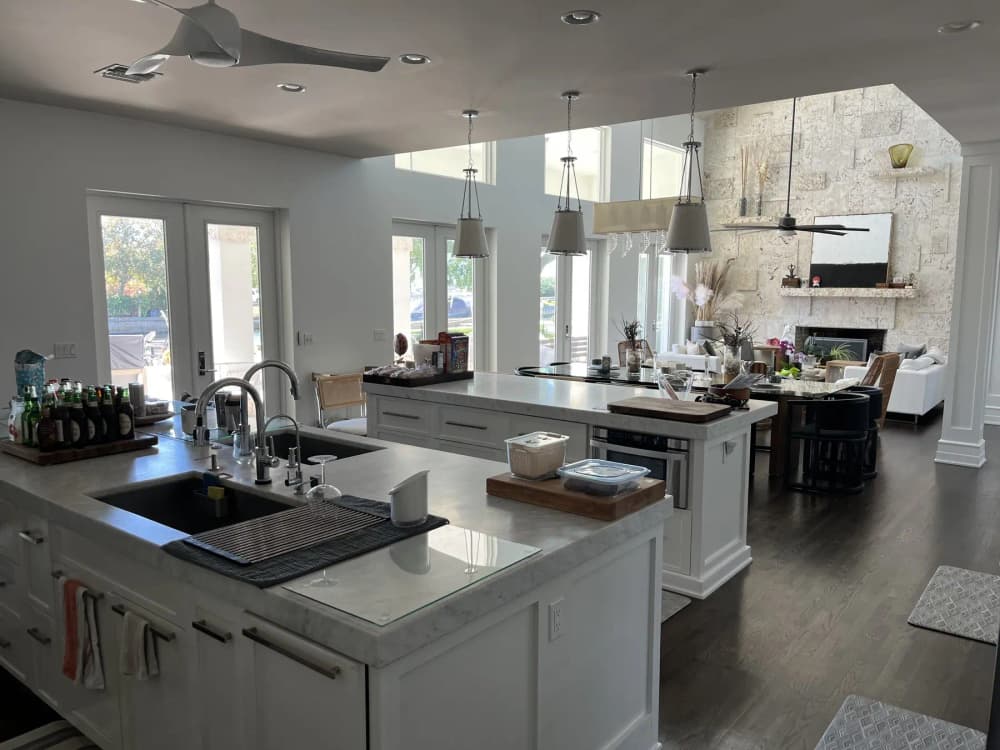
Where LG puts the ice maker — and why it matters
LG refrigerators from the last decade use three layouts, and the layout decides what can go wrong.
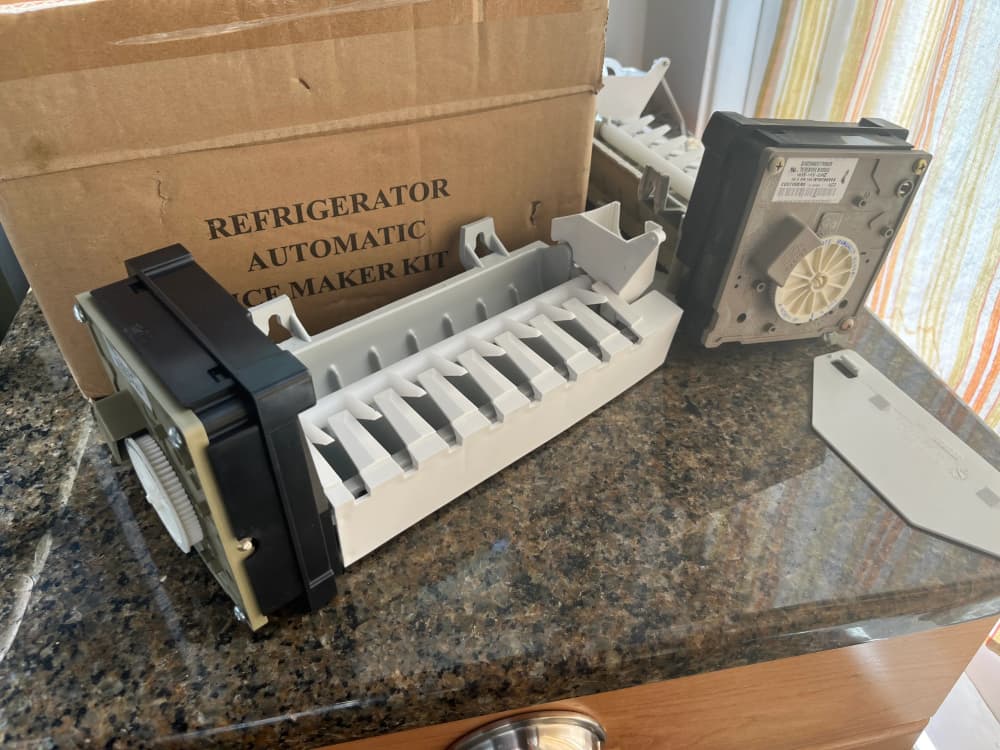
In-freezer slim ice maker. Standard on bottom-freezer French door models: a compact tray unit at the top of the freezer drawer, fed by a fill tube through the back wall. Simple and cold — but that tubing runs through the coldest air in the cabinet, which is exactly why it freezes.
In-door ice maker. On Door-in-Door and InstaView models the ice maker lives in the fresh-food door with the dispenser, in its own insulated box. Cold air reaches it through a duct from the freezer. If the duct ices up or the damper sticks, the door box warms and the ice maker quietly stops while the rest of the fridge behaves. This is the layout behind most "LG fridge ice maker not working but everything else is fine" calls — and the one where a cold freezer thermometer can mislead you.
Craft Ice. Newer premium models add a second, round-ice maker in the freezer. It is slow by design — a handful of spheres a day is normal — and it pauses whenever the cube bin is full. If your Craft Ice "isn't working", check the cube bin first. The sphere unit is its own assembly with its own motor.
Two LG-specific notes. ThinQ models can run Smart Diagnosis through the app and report a stored fault; on an ice call I care about the ice-room fan code (Er IF) and any freezer fan code. And the model number sticker on the left fresh-food wall — LMXS, LFXS, LRMVS, LRFVS — tells me which layout you have before I arrive, so read it off when you call.
What actually fails, part by part
Past the free checks, an LG ice maker issue comes down to a short parts list. Here is each one, the mechanism, and how I confirm it — because on LG parts, guessing is expensive.
Frozen fill tube. Every fill leaves a film of water in the tube. A very cold freezer, a humid Florida kitchen with a door that opens often, or — the real culprit — an inlet valve that seeps a small amount of water after it closes, and that film grows into a plug. Symptom: the test cycle turns the tray, the valve hums, no water reaches the mold, sometimes an icicle hangs from the tube outlet. Thaw it (warm cloth or hair dryer on low, never a heat gun on plastic), then find out why. A frozen water line that returns within a week has a faulty valve behind it, and the valve gets replaced, not the tube.
Water inlet valve. Back of the refrigerator, bottom, behind a small access panel: a dual-solenoid valve — one coil for the water dispenser, one for the ice maker — with a mesh screen where the house line connects. Solenoids fail two ways: stuck closed (a buzz on the test cycle, no water flow) or not sealing (a constant drip that freezes the fill tube, or on the fresh-food side overflows the mold and leaves a leak or a sheet of ice). Tampa Bay hard water and any well water scale the screen and the valve seat, so I check the screen for grit, meter each coil, and watch actual flow with the tube disconnected. Ice coil dead, water coil fine: that is why the dispenser works while the icemaker does not. The genuine OEM LG valve is a modest part; the labor is mostly moving the fridge without kinking the water line.
Water filter. LG filters — LT1000P on most 2017-and-newer models, LT700P and LT800P on the generation before, LT600P on older ones — are rated for six months. In Tampa Bay hard water they clog closer to five, and a clogged filter starves the ice maker before it visibly slows the dispenser, because the ice fill is a short timed burst that needs full pressure. The definitive test is the bypass plug that came with the fridge: if ice returns with the filter out, the filter was the whole story. Two traps: a new filter not turned fully into the filter head passes almost no water, and a bargain filter with the wrong seal does the same. Buy the real one or use the bypass — not the mystery one.
Ice maker assembly — motor and thermistor. Inside the in-freezer unit a small gear motor twists the tray to release the cubes, and a thermistor tells the board when the mold is cold enough to harvest. A dead motor: no movement on the test cycle, no ice, no noise. A drifting thermistor is sneakier — the board never sees "frozen", so the mold sits full forever, or it harvests early and you get slush and a bin of fused ice. LG does not sell the motor and thermistor separately, so the fix is a new ice maker assembly: a plug-in part at the top of the freezer, about a dozen screws and one connector. An OEM assembly resets the clock on the whole unit; the no-name ones I have pulled out after six months do not.
Door switch and control board. Rare, but real. A door switch stuck "open" disables ice production; a damaged board can drop the ice maker's power or ignore the thermistor. I test these last, with a meter, after everything mechanical is proven. A board bought on a hunch is the least satisfying way to spend money on a refrigerator.
When the ice maker is the symptom, not the problem
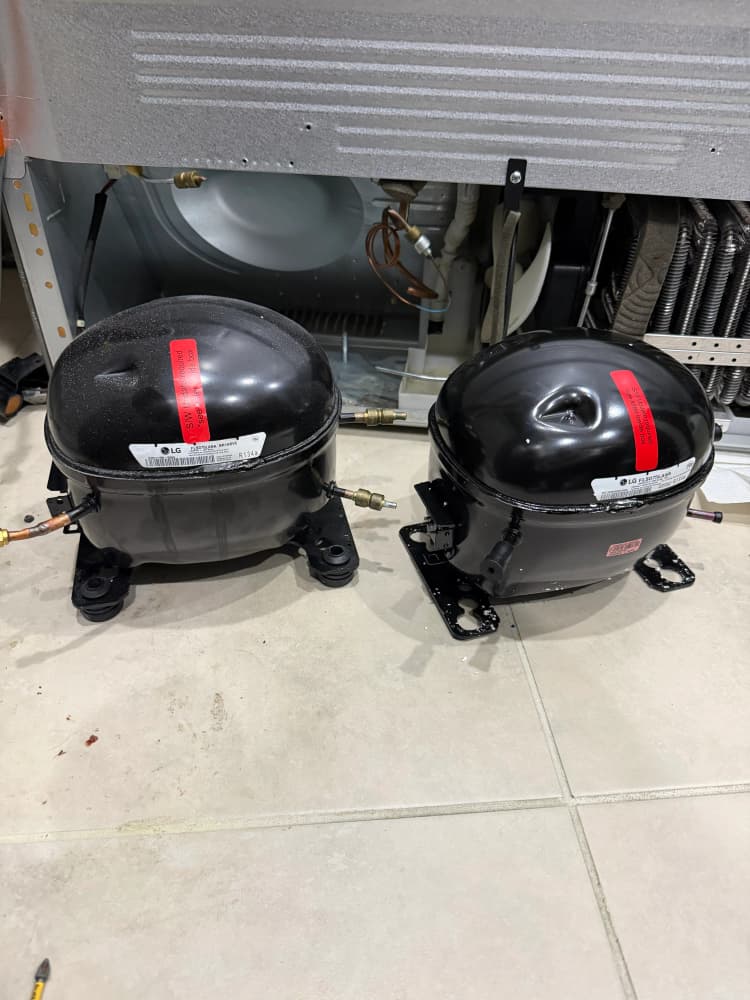
This is the section I most want LG owners to read. LG built its refrigerators around the linear compressor from roughly 2014 on, and a weakening linear compressor does not fail all at once. It loses capacity. The freezer drifts from 0°F to 8, then 12, then 18. Ice cream goes soft. And well before the fresh-food side warms enough to notice, the ice maker stops — because it is the one component that needs the freezer to be genuinely cold.
So when someone tells me "the LG ice maker stopped making ice a month ago and now the freezer seems a little soft", I do not start with the ice maker. I check compressor amperage, the condenser, and the frost pattern on the evaporator behind the freezer back panel. If the compressor is the story, a new ice maker assembly fixes nothing. I have a full guide on why an LG refrigerator stops cooling, and the sealed-system side lives on my LG compressor replacement page.
Two ways to tell at home. The thermometer: a freezer that cannot hold 5°F or better with the door shut for two hours has a cooling problem, full stop. The frost: pull the freezer back panel (a few screws with an ordinary screwdriver) and look at the coil. A healthy evaporator frosts evenly across its whole face; a coil frosted only on the first pass with the rest bare is a compressor or refrigerant story. That picture is worth more than any error code.
Worth knowing: many affected LG models carried an extended sealed-system warranty on the compressor part. I am an independent appliance technician, not an LG factory-authorized dealer, so I will tell you honestly whether the compressor is still covered and which route is cheaper for you — nobody's script.
Tampa Bay water, heat and storms — what they do to an LG ice maker
The failure list above is national. The order of likelihood is local.
Hard water and well water. Municipal water across Hillsborough and Pasco runs hard, and many homes in Odessa, Lutz and Land O' Lakes are on private wells with iron and sediment on top. Both shorten the LG filter's life and pack the inlet valve screen with grit. On a well, a sediment filter ahead of the refrigerator saves more than any appliance repair — and keeps the ice cubes clear instead of cloudy.
Humidity. A Florida kitchen in August pushes moist air into the freezer every time the door opens, and that moisture ends up as frost on the fill tube, the chute and the in-door ice room duct. A gasket that is even slightly torn multiplies the effect and can freeze a fill tube on a perfectly healthy valve. I check gaskets on every ice call.
Storm season. Outages and the surges after them are how LG boards get confused. After an outage, give the ice maker 24 hours — the freezer has to pull back down, and the first batches are often small or hollow. No ice 48 hours later, start at the top of the free checks.
Heat. A garage refrigerator in Brandon or Riverview in July is asking a lot of any compressor. A garage LG stops producing ice as fast in summer even when nothing is wrong. If the ice is slow but the freezer holds 0 to 5°F, be patient; if it does not, see the section above.
Replace the ice maker assembly, or replace the fridge?
Honest math, because an LG French door refrigerator is not cheap to replace and its ice maker is not free to fix.
| What the diagnosis found | Usual fix | Worth doing? |
|---|---|---|
| Ice Off, warm setting, bin not seated | Settings — nothing to buy | Always. You just did it. |
| Clogged or mis-seated filter | New LG filter (LT1000P / LT700P family) or bypass plug | Always — maintenance, not repair. |
| Frozen fill tube, valve sealing fine | Thaw; check gasket and freezer setting | Yes. Watch whether it comes back. |
| Fill tube refreezes, or valve buzzes with no flow | Water inlet valve assembly | Yes on any LG under 12-15 years. |
| Tray never moves on test; thermistor faults | Ice maker assembly (motor and thermistor included) | Yes if the fridge is cooling well. It is a plug-in part. |
| In-door ice room warm, duct or damper iced | Defrost the duct; repair damper or door heater | Usually yes — but find out why it iced. |
| Freezer cannot hold 5°F; uneven evaporator frost | Compressor or sealed-system repair | Depends on age and warranty — see the linear compressor guide. |
| Ice maker dead and compressor weak and board faults | Multiple major parts | Usually no. Put the money toward a new refrigerator. |
The rule I use: one failed component on a refrigerator that is otherwise cooling well is a repair, every time. Two unrelated failures on a unit past ten years is a conversation. An ice maker assembly alone never justifies replacing a working LG fridge — that is a bin of ice for the price of a weekend away, not a new kitchen. For the wider picture see whether a refrigerator is worth repairing and what shortens a refrigerator's lifespan in Florida. Every visit starts with a $69 diagnostic, applied in full to the repair you approve, with a written number before any part is ordered.
How common is this? The search data
You are in good company. Ubersuggest counts about 1,300 U.S. searches a month for "lg refrigerator ice maker not working", and the shape of the year is not an accident: demand sits lowest in winter and climbs through late spring into a summer peak, when freezers work hardest and every household wants more ice.
Search data: Ubersuggest, national monthly volume, last 12 months. Searches nearly double from the winter floor to the June and August peaks — the same months a Tampa Bay freezer spends the most time above harvest temperature. If your ice stopped in summer, check the freezer temperature before you blame the ice maker.
Expert opinion — Anatoli Didenco, owner, Perfect Appliance Repair Tampa. On an LG, I never diagnose the ice maker until I have a thermometer reading from the freezer. At 0 to 5°F the ice maker gets the test cycle and I follow the water: tube, filter, valve, then the assembly. At 10°F or warmer the ice maker is fine and the compressor is the conversation — and I would rather say that up front than sell you an ice maker that will sit in a warm freezer doing nothing. Twenty-plus years of hands-on technical experience taught me that the cheapest tool in the van is the one that prevents the wrong repair.
Before you let anyone replace an LG ice maker
BBB Accredited, A+ rated, and more than 200 five-star reviews across major platforms. Read what owners actually say on the reviews page — Google and BBB, in their own words.
And the honest part: if Ice Off was lit, or the filter was overdue, or the tray moved and water arrived on the test cycle, you don't need me. Give it 24 hours and enjoy the ice.
LG ice maker not working — quick answers
How do I reset the ice maker on my LG refrigerator?
Make sure Ice Off is not lit on the panel, then find the test button on the ice maker itself (front or underside of the in-freezer unit, behind the bin) and hold it about three seconds until the tray starts to turn. That forces one harvest-and-fill cycle. To clear the control board as well, unplug the fridge for five minutes.
How do I force my LG fridge to make ice?
Hold the ice maker's test button for about three seconds; the tray rotates, dumps the mold, and a few seconds later the fill valve should run. Tray turns but no water arrives: look at the fill tube, filter and inlet valve. Tray never moves: the ice maker motor or its thermistor is the suspect.
Why did my LG fridge suddenly stop making ice?
In order of likelihood: someone pressed Ice Off, the freezer is running warmer than about 5°F, the water filter clogged, the fill tube froze, or the water inlet valve failed. If the freezer itself feels warm, the ice maker is only reporting a cooling problem, and on a linear-compressor LG that gets checked first.
Why is my LG ice maker not working but the water dispenser works?
Water and ice use two different solenoids on the same inlet valve, so a working dispenser clears the filter, the house supply and the main line. What is left is on the ice side only: the ice solenoid, a frozen fill tube, the ice maker's motor or thermistor, or a freezer not cold enough to complete a cycle.
How long does an LG refrigerator ice maker last?
The ice maker assembly is a wear part and often needs attention somewhere in the 5-10 year range — usually the motor, the thermistor or the fill valve. The refrigerator around it is a separate question; a linear-compressor LG that is still cooling well is worth keeping and fixing.
Should I replace the whole ice maker or just the part that failed?
On LG in-freezer units the motor and thermistor come as part of the assembly, so a failed motor means a new assembly. Fill tube, filter and inlet valve problems are cheaper fixes and need no new ice maker at all. I only recommend the assembly when the test cycle proves the unit itself is dead.
Related services
Book same-day service or read more about the exact repair:
- Ice maker repair
- LG appliance repair
- LG compressor replacement
- Refrigerator repair
- Refrigerator ice maker not working? The full guide
- Water dispenser not working? Start with the lock and the filter
Call or text (813) 522-0014 or book online — Perfect Appliance Repair Tampa covers Tampa, South Tampa, Wesley Chapel, Zephyrhills, Dade City, and surrounding Tampa Bay.
Anatoli Didenco is the owner-technician of Perfect Appliance Repair Tampa, with 20+ years of hands-on technical experience in refrigeration and appliance repair across Hillsborough, Pinellas, and Pasco Counties. He specializes in refrigerators — particularly Sub-Zero, Wolf, and premium built-in systems — and sealed-system and compressor work. He answers the phone, and either he or Nick, his technician, shows up at the door. Read more on the About page.
Perfect Appliance Repair Tampa serves Tampa, South Tampa, Wesley Chapel, Zephyrhills, Dade City, and the surrounding Tampa Bay area. Reviews are available on the company’s Google Business Profile and BBB listing.
We Stand Behind Our Work.