
Refrigerator noise, the short version: normal sounds vs. common causes
Most refrigerator noises are normal, and the few that are not tell you exactly which part is failing. A hum, a gurgle after the compressor stops, a click when the ice maker fills, and a pop or crack during the defrost cycle are the fridge doing its job. A squeal or chirp from inside the freezer is a fan motor bearing. A click every few minutes with no cooling is the compressor's start relay. A grind or scrape is a fan blade hitting ice, which means the defrost system has failed. A knock is compressor mounts or refrigerant hammer in the lines. A rattle is almost always something loose: the drain pan, the water line, or the condenser fan chewing on debris.
Why does a refrigerator make noise at all? Refrigerator noise is the sound of a pump, two fans, a heater and a lot of plastic, all cycling on and off in a cabinet that expands and contracts. The one rule that matters more than any list: a noise plus a second symptom — warmer food, frost on the freezer back wall, a puddle, a compressor that never stops — is a fridge telling you it is about to quit. On my Tampa Bay calls the sound is usually the earliest warning anyone gets, and the cheapest moment to act on it.
Certain sounds are no cause for concern: clicking or popping a few times a day, a gurgle after the compressor stops, the steady hum of normal operation. Others could indicate a part that will need to be replaced soon. Most of the common reasons a fridge gets louder are minor issues with easy fixes any homeowner can do in ten minutes, and catching them early is how you avoid costly repairs.
Noisy refrigerator: normal or not? Start here
Match the sound before you match the part. The same noise could be harmless or the start of a failure depending on where it comes from and what else changed, so every row here has a mechanism behind it, and the sections below walk through each one.
| The sound | Normal? | What is making it |
|---|---|---|
| Steady low hum | Normal | Compressor and fans running |
| Hum that got noticeably louder, or a rough buzz | Not normal | Compressor straining — dirty condenser coils, failing compressor, or a vibrating inlet valve |
| Rising and falling whine (LG, Samsung, newer Whirlpool) | Normal | Inverter compressor changing speed |
| One click when the ice maker fills; one click when the damper moves | Normal | Water valve; air damper between compartments |
| Click every 2-5 minutes, fridge warming | Not normal | Start relay / overload — compressor cannot start |
| Rattle from the bottom or back | Not normal, usually cheap | Drain pan, water line on the cabinet, condenser fan hitting debris |
| Knock or bang when the compressor starts or stops | Not normal | Compressor mounts, or refrigerant hammer in the lines |
| Gurgle, trickle, hiss after the compressor stops | Normal | Refrigerant equalizing; defrost water running to the drain pan |
| Squeal, chirp, whine from inside the freezer | Not normal | Evaporator fan motor bearing |
| Grind or scrape from inside the freezer | Not normal — act now | Fan blade hitting frost; defrost system has failed |
| Pop or crack a few times a day | Normal | Plastic liner expanding and contracting during defrost |
| Runs all day without stopping | Not normal | Cooling problem: coils, door seals, defrost, or the sealed system |
Where is it coming from? Top, back, bottom, inside the freezer
The location narrows the list faster than the sound does. Put your ear to the fridge — carefully — and place it.
- Bottom back, behind the kick plate or rear panel. The compressor, the condenser fan, the condenser coils and the drain pan all live here. Hums, buzzes, clicks, knocks and most rattles come from this corner.
- Inside the freezer, behind the back panel. The evaporator coil, the evaporator fan and the defrost heater. Squeals, chirps, grinding and scraping start here, and so does the pop of the defrost cycle.
- Top, ceiling and doors. The damper that meters cold air between the refrigerator and freezer compartments clicks here; ice makers, dispenser motors and in-door ice fans live in the doors.
- The cabinet itself. Before you blame a part, make sure the fridge is causing the noise at all. A rattle that changes when you press a hand on the side panel or move a jar on top is not a part — it is vibration reaching something loose, or the fridge touching the wall.
Fridge making a loud hum or buzz: the compressor working too hard
A refrigerator hums because the compressor is a motor pumping refrigerant and the fans are moving air. Quiet and steady is normal operation. When it becomes a loud noise — rough, constant, or louder than last year — the compressor is straining, and there are three common causes.
Dirty condenser coils. The coils under or behind the fridge dump heat into the kitchen. Coated in dirt and debris and pet hair, they cannot shed it; the compressor runs hotter, longer, and louder. Cleaning the coils is the first thing I do on any loud-hum call, and often the last — a vacuum and a coil brush, no parts.
A failing compressor. Wear and tear inside the compressor makes it louder as it ages. A hum that has grown rougher over months, a housing too hot to touch, and a fridge not quite as cold as it used to be all point the same way. The fix is a compressor, which is a real conversation about age and value — see whether a refrigerator is worth repairing.
Inverter compressors. LG's linear compressor and Samsung's digital inverter ramp up and down, and the pitch of the hum changes with them — a rising whine after the door has been open, a soft drone at night. That whine is normal, and new LG and Samsung owners call about it every summer. What is not normal on those models is a hum with a slowly warming freezer — the classic sign of a linear compressor losing capacity; my LG compressor replacement page covers that repair.
Louder after a big load. A compressor may produce more noise for a few hours after a power outage or a full grocery run. That is it pulling warm food back down to temperature, and it should settle by evening.
A buzzing noise without a hum. A buzz of a few seconds when the water valve opens is usually the inlet valve energizing to fill the ice maker or to dispense water at the door. On Frigidaire, Samsung and other models with the ice maker in the door, a loud grind when you press for ice is the dispenser auger pushing cubes down the chute; loud is fine, loud with no ice is not. If the fridge is not connected to water, that valve buzzes against nothing — shut the ice maker off and the buzzing sound stops. A buzz that vibrates the whole cabinet is the compressor or a fan touching the frame; see the rattling section.
Clicking: start relay, damper, ice maker — one of them matters
Three different clicks live in a refrigerator, and only one of them is a problem.
The bad one: a clicking sound every two to five minutes. On a conventional compressor the start relay and overload protector sit on its side under a small cover. The relay gives the compressor its starting kick; the overload cuts power if the motor draws too much. When the relay fails, or the compressor is seizing, you hear a click, a few seconds of hum as it tries to start, a second click as the overload trips — and a repeat a few minutes later. Food warms; the fridge feels alive but is not cooling. A relay is a cheap part; a compressor that will not start with a good relay is not.
I meter the windings to diagnose which one it is before anyone buys anything. On inverter models the inverter board does the relay's job, and a fridge that clicks without cooling is often that board rather than the compressor.
The harmless ones. The air damper between the freezer and the fresh-food section clicks when it opens and closes. The ice maker's fill valve clicks once open, once shut, with a few seconds of water in between. The defrost timer on older models clicks into and out of the defrost cycle once or twice a day. None of these need me.

Rattling, knocking and banging: loose parts that vibrate, or the compressor
Rattling is the cheapest noise on the page. The drain pan under the fridge walks loose over the years — or after the fridge is moved for a floor cleaning — and buzzes against the compressor every time it runs; push it back into its clips. A water line pressed against the cabinet carries compressor vibration into the sheet metal; a zip tie and an inch of clearance fix it. Anything on top of the fridge becomes a percussion section.
The condenser fan can pull in a twist tie or a scrap of packing foam and clip it on every turn; unplug, pull the rear panel, clear it. And an unlevel cabinet may create a rattle of its own: set the front feet so the doors swing shut on their own and the cabinet does not rock.
Knocking and banging are the compressor's neighborhood. It sits on rubber isolation mounts; when they harden and crack, the compressor body thumps against its base at start and stop. The other knock is refrigerant hammer: a thud in the lines a moment after shutdown as refrigerant and oil equalize. One bang at shutdown on an old fridge is usually just character. A knock that has grown louder over a year, or that comes with cooling problems, gets the compressor looked at.

Squealing, chirping, grinding and scraping: the fans
Two fans move air in a refrigerator, and both make a specific sound when they fail.
The evaporator fan. Behind the back panel inside the freezer, it pulls air across the evaporator coil and helps circulate it through both compartments. Its motor bearing dries out, and the first sign is a squeal, chirp or high whine that gets louder when the door is closed and the fan is running, and pauses when you open the freezer door (most fridges stop the evaporator fan when a door opens). Left alone, the bearing seizes, the fan stops, and the freezer keeps freezing while the fresh-food section warms — the exact pattern in refrigerator not cooling but freezer works. The motor is a modest part; reaching it means emptying the freezer and pulling the back panel.
Grinding or scraping from the same spot is a different story: the fan blade is hitting frost. The evaporator coils are defrosted a few times a day by the defrost heater, run by a thermostat or sensor and the board. When one of those fails, frost builds until it reaches the blades. The noise is the symptom; the defrost system is the problem, and the fridge will stop cooling within days. A 24-hour unplugged defrost is a quick fix that quiets it, until the frost returns. A sheet of frost on the freezer's back wall means this is you.
The condenser fan, at the bottom back beside the compressor, fails the same way, but you hear it behind the fridge, not inside it, and it does not pause when a door opens. When it stops, the compressor overheats and the hum gets loud — a squeal that turns into a loud hum is one fault, not two.
Gurgle, hiss, pop and crack: the normal ones
If the fridge remains cold and the sound is one of these, it can wait. Your user manual lists most of them as normal operating sounds.
Gurgling and trickling after the compressor shuts off is refrigerant equalizing through the cooling system. After the defrost cycle you also hear real water: melt from the evaporator running down the drain tube to the drain pan, where the compressor's heat evaporates it. Both are normal. If the drain tube starts to clog, that trickle turns into a gurgle inside the fridge and, later, water under the crisper drawers. Gurgling that never stops on a fridge that is not cold points to the sealed system.
Hissing is the same refrigerant story, or melt water dripping onto the hot defrost heater. A hiss during defrost is fine. A continuous hiss from a fridge that stopped cooling is a leak — my hub on a refrigerator that is not cooling explains what that means for the repair decision.
Popping and cracking are the plastic liner and foam insulation expanding and contracting as the cabinet warms during defrost and cools again. New refrigerators pop more; so do garage fridges. It is the same sound your house makes at night, and it means about as much.
Ice dropping, valve hum, dispenser motors — an ice maker fills, freezes, twists and dumps, and every step makes a sound. Loud but working is fine; loud and not working is my ice maker guide.
Running constantly: not a noise problem, a cooling problem
A refrigerator should cycle: run, reach temperature, rest. In a Tampa kitchen in August it runs more than it rests, but it still stops. A compressor that never stops is not being loud — it is being honest. Either heat is getting in faster than it can be removed, or the compressor has lost the capacity to remove it. Either way the refrigerator runs on, and its energy efficiency goes with it. A fridge that runs efficiently still rests between cycles; one that never rests loses cooling performance long before the food feels warm.
The first group is cheap: coils packed with dust, a door gasket that no longer seals (close the door on a dollar bill; if it slides out freely, the gasket is done), a door held ajar by a crisper drawer, or a freezer set colder than it needs to be. The second group is the fridge itself: an iced-over evaporator from a failed defrost, a weak compressor, or a refrigerant leak. On LG and Samsung inverter models, constant running with a freezer that creeps from 0°F to 10 and then 20 is the signature of a compressor losing capacity — the ice maker usually quits first, weeks before the food warms.
Constant running also shortens the compressor's life, which is why it belongs in the repair-or-replace math. My guide to what shortens a refrigerator's lifespan has the details.
Tampa Bay heat, humidity and dust: why an old fridge gets louder here
The mechanisms above are universal. The frequency is local.
Heat. A refrigerator in a Brandon garage or a Riverview lanai kitchen in July sits in 90°F air and has to push heat into it. The compressor and condenser fan run longer, and every worn bearing and loose pan gets more hours to complain. A hum that is louder in summer is often the fridge working harder. A hum that is louder than last summer is worth a coil cleaning and a look.
Humidity. Every door opening in a Florida kitchen brings in moist air that ends up as frost on the evaporator. The defrost system here works harder than the same part in Denver, and when it fails, frost reaches the fan blades faster — grinding moves from "noise" to "not cooling" in days.
Dust and pets. Air conditioning nine months a year moves a lot of air through a house, and the condenser coils under the fridge are the filter nobody changes. Twice a year in a home with pets is not too often. A clean coil is the cheapest way to keep the appliance quiet and the food fresh.
Storms and surges. After an outage, a fridge runs loud and constant for several hours pulling back down to temperature; that is normal. A fridge that clicks and does not restart when power returns is a relay, a board, or a compressor that did not survive the surge. A surge protector on the refrigerator outlet is cheap insurance.
Refrigerator repair or replace: honest math by sound
Most refrigerator noises are cheap to fix or free. Coils, drain pan, leveling, water line, a loose jar on top: no parts. A start relay, an evaporator or condenser fan motor, a defrost thermostat or heater: modest parts with real labor, worth doing on any refrigerator that is otherwise cooling well — a fan motor is a fan motor, even at fifteen years old.
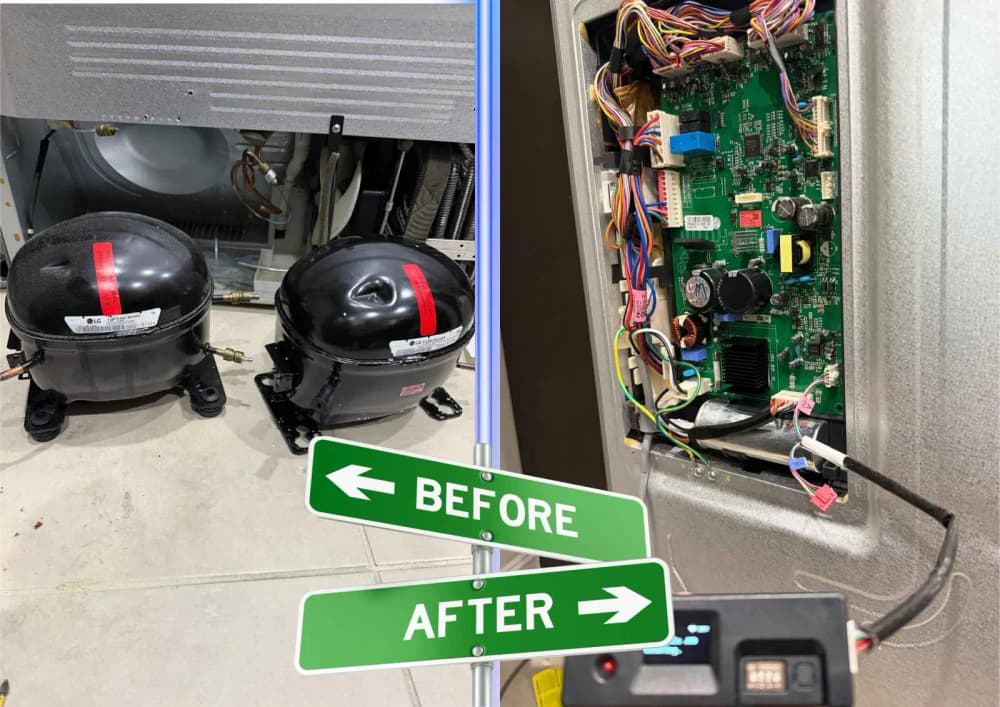
The exceptions are the compressor and the sealed system. A knocking compressor with failed mounts, one that will not start with a good relay, or a hiss with no cooling puts you in the replacement conversation on any fridge past ten or twelve years, and I will say so before you approve anything. Anything on the compressor or sealed system needs professional assistance and a meter, not a video.
The one place I lean toward refrigerator repair anyway is an LG or Samsung inverter compressor on a fridge under eight years old that is otherwise in good shape — a known job on a fridge worth keeping. For the broader math, see is it worth repairing a refrigerator. Every visit starts with a $69 diagnostic, applied in full to the repair you approve, and the answer comes in writing.
How common is this? The search data
Ubersuggest counts about 1,000 U.S. searches a month for "refrigerator making noise", and the year is nearly flat — a small bump in late summer, a slight dip through the winter, and back up in spring. Fridges do not get louder on a schedule; they get louder when a part wears out, and that happens every month of the year.
Search data: Ubersuggest, national monthly volume, last 12 months. The only real peak is August, at the end of a summer when every compressor in Florida has been running flat out. If your fridge got louder this summer, the coils are the first thing to check and the compressor the last.
Expert opinion — Anatoli Didenco, owner, Perfect Appliance Repair Tampa. I ask two questions on every noise call before I open my toolbag: where is it coming from, and does it stop when you open the freezer door? A sound from inside the freezer that pauses when the door opens is the evaporator fan — either its bearing or ice on its blades — and I know the repair before I see it. A sound from the bottom back that does not care about the door is the compressor's neighborhood, and that is where the meter comes out. Twenty-plus years of hands-on technical experience taught me that the fridge tells you what is wrong; you just have to know which sound is talking.

Before you let anyone open your refrigerator
BBB Accredited, A+ rated, and more than 200 five-star reviews across major platforms. Read what owners actually say on the reviews page — Google and BBB, in their own words.
And the honest part: if the noise was a rattling drain pan, a jar on top, dusty coils, or the normal gurgle after the compressor stops, you don't need me. Enjoy the quiet.
Refrigerator noise: frequently asked questions
When should I worry about my fridge noises?
Worry when a sound is new, getting louder, or comes with a second symptom — warmer food, frost on the freezer back wall, water on the floor, or a compressor that runs without stopping. A steady hum, an occasional gurgle, a click when the ice maker fills and a pop during defrost are normal. A squeal, a grind, or a click every few minutes are not.
What does a bad refrigerator compressor sound like?
Three ways. A click every two to five minutes with a short hum in between means the compressor tries to start and trips its overload. A loud, rough hum or a knock that was not there last year means it is working hard or its mounts have failed. And a compressor that runs all day while the freezer slowly warms is quiet but failing — on LG and Samsung inverter models that is the usual pattern.
Why is my fridge suddenly making noise?
Something changed: dust on the condenser coils making the compressor work harder, a fan blade that started hitting frost because a defrost part failed, a drain pan or water line that shifted when the fridge was moved, or a fan bearing that finally wore through. Find where the sound comes from — back, bottom, or inside the freezer — and the section of this guide for that spot names the part.
How do I stop my fridge from making noise?
Start with the free fixes: level the fridge, pull it an inch from the wall, seat the drain pan, clear anything off the top, and vacuum the condenser coils. If the noise is a fan hitting ice, a 24-hour unplugged defrost quiets it — until the frost returns, which means a defrost part needs replacing. Bearing squeals and compressor clicks do not go away on their own; those are part replacements.
Is it normal for a new fridge to be loud?
A new refrigerator is often louder for the first day or two while it pulls down to temperature, and inverter compressors on LG, Samsung and newer Whirlpool models make a whine that changes pitch as they speed up and slow down. That is normal. A new fridge that knocks, grinds or clicks repeatedly is not, and that is a warranty call to the seller, not a repair.
Can a fridge make noise and not cool at the same time?
Yes, and the combination is the clearest signal on this page. A click with no cooling is a compressor that will not start. A grind with no cooling is a fan blade frozen into frost. A loud constant hum with a warm fridge is a compressor straining against dirty coils or a failing sealed system. Noise plus warm food is a same-day call, not a wait-and-see.
Related services
Book same-day service or read more about the exact repair:
- Need it fixed in Tampa? Refrigerator repair in Tampa, FL
- Refrigerator not cooling repair
- Why your refrigerator is not cooling — the full guide
- Is it worth repairing a refrigerator?
- LG appliance repair
- Samsung appliance repair
Call or text (813) 522-0014 or book online — Perfect Appliance Repair Tampa covers Tampa, South Tampa, Wesley Chapel, Zephyrhills, Dade City, and surrounding Tampa Bay.
Anatoli Didenco is the owner-technician of Perfect Appliance Repair Tampa, with 20+ years of hands-on technical experience in refrigeration and appliance repair across Hillsborough, Pinellas, and Pasco Counties. He specializes in refrigerators — particularly Sub-Zero, Wolf, and premium built-in systems — and sealed-system and compressor work. He answers the phone, and either he or Nick, his technician, shows up at the door. Read more on the About page.
Perfect Appliance Repair Tampa serves Tampa, South Tampa, Wesley Chapel, Zephyrhills, Dade City, and the surrounding Tampa Bay area. Reviews are available on the company’s Google Business Profile and BBB listing.
We Stand Behind Our Work.