Perfect Appliance Repair Tampa (813) 522-0014
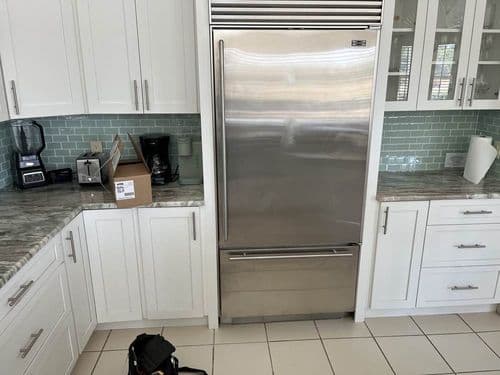
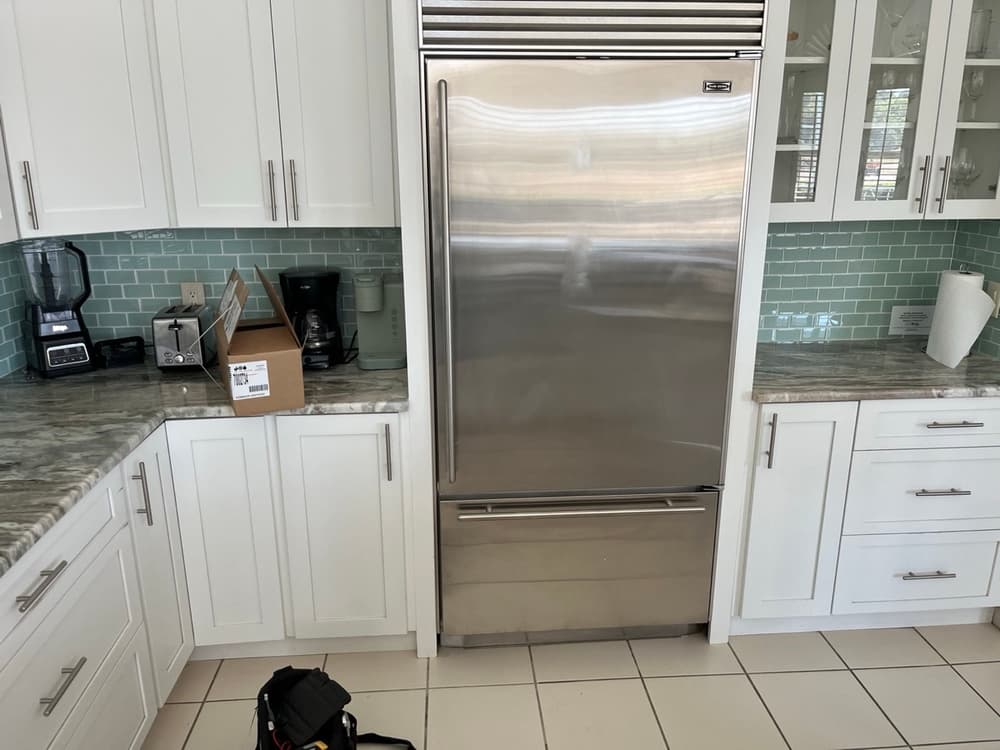
Tampa Bay kitchen interior with a Sub-Zero built-in refrigerator set into custom cabinetry
Home Services Refrigerator Repair Sub-Zero & Built-In
$69 diagnostic — applied to the repair

Sub-Zero Refrigerator Repair in Tampa Bay — Built-In Specialists

Built-in refrigerators, freezers, wine storage and ice makers — 20+ years of hands-on technical experience

The kitchen renovation photos are still on your phone — the ones you show people when they ask why it took fourteen months and cost what it cost. The Sub-Zero was the centerpiece, tucked into custom cabinetry built around its exact dimensions. So when the display starts flashing a temperature that isn't right, your stomach drops further than it would for an ordinary fridge, because this one isn't swappable in an afternoon.

Mention Sub-Zero for priority scheduling.

Get your free quote
We confirm within the hour, Monday – Saturday
$69
diagnostic

No obligation, and the phone quote is free. Your info is never shared.

You don't need to get there. A Sub-Zero shouldn't be guessed on, patched with cheap parts, or replaced just because someone doesn't know how to diagnose it properly. Twenty-plus years of hands-on work with these systems across Tampa Bay — including built-ins past the 30-year mark that are still running — is what this page is built on. That experience is specific: how the dual-compressor design, sealed system, evaporators, condenser airflow, thermistors, control boards, door seals and microprocessor controls actually behave when one of them fails. When your Sub-Zero needs service, you don't need a salesperson pushing replacement. You need someone who respects the machine, finds the real failure, and repairs it the right way.

  • 20+ years of hands-on technical experience — Sub-Zero and built-in units past the 30-year mark still running.
  • A 12-month parts and labor warranty backs our Sub-Zero repairs.
  • Genuine Sub-Zero OEM parts, with same-day availability for common repairs.
  • The $69 diagnostic is applied to the repair, and no fix means no labor or parts charge.
  • Owner-operated, no middlemen — the specialist who answers is the specialist who repairs.
  • Independent service for in-warranty and out-of-warranty Sub-Zero and Wolf equipment.
TOOL 1 · MODEL DECODER

Find out what your Sub-Zero model number actually means

The plate is inside the fresh-food compartment on the upper left wall, or behind the toe-kick grille on older cabinets. Type what it says — BI-36U, 632, 700TCI, IT-30R — and this tells you the platform, the width, whether you have dual refrigeration, and what that changes when a technician arrives. Nothing is sent anywhere; it runs in your browser.

Or tap a model we see often in Tampa Bay

Your platform, width, refrigeration design and service notes appear here.

Every Sub-Zero series prefix we service

PrefixPlatformEraWhat it means on a service call
BI Classic Built-In series 2000s to current The workhorse of Tampa Bay kitchens. Dual refrigeration, magnetic door seals, condenser behind the toe-kick grille. Gaskets, evaporator fans, ice makers and control boards lead the repair list.
PRO PRO Series 2000s to current The flagship — commercial styling, glass-door options, serious mass. Same diagnostic logic as the BI cabinets with more of everything, and worth professional repair at any age.
IT Designer Integrated tall column 2010s to current Panel-ready columns living flush inside millwork, so clearance and condenser access matter more than on any other Sub-Zero. Electronics-forward: sensors and control faults show as display messages before they show as warm food.
IC Designer Integrated column 2010s to current Single-duty refrigerator or freezer columns, usually paired. One column failing while its twin runs perfectly is normal and tells us exactly where to look.
ID Designer Integrated drawers / French door 2010s to current Drawer and French-door configurations. Drawer gaskets and slides take more abuse than doors do, and a drawer that no longer closes square is a cooling fault in the making.
DEC Designer column (current naming) 2020s Current Designer naming for columns. Fully integrated, panel-ready, heavy on electronics and door hardware.
DET Designer over-and-under (current naming) 2020s Current Designer naming for over-and-under cabinets. Dual refrigeration retained, so the fridge-warm-freezer-fine pattern still narrows the diagnosis to one circuit.
CL Classic series (current naming) 2020s Current naming for the Classic built-ins — the modern descendant of the BI cabinets, with the same dual-refrigeration architecture and the same condenser-first service logic.
UC Undercounter refrigerator, freezer or drawers 2000s to current Undercounter cabinets and refrigerator drawers, often in an island or butler pantry. The condenser breathes through a toe-kick grille that gets blocked by everything — the single most common finding.
UW Undercounter wine storage 2000s to current Undercounter wine cabinets. Same toe-kick airflow story, plus door seals and dual-zone dampers. See our wine cooler page for the full treatment.
IW Integrated wine storage 2010s to current Panel-ready wine columns. Anti-sweat door heaters and zone sensors join the usual fault list.
WS Wine Storage (legacy) 1990s–2000s The legacy wine cabinets — WS-30 and relatives. Still repairable, still worth it, and still turning up in Tampa Bay wine rooms.
4 Legacy 400-series wine cabinets 1990s–2000s The 424 and the dual-zone 427 and 427R. One compressor feeds two zones through solenoids, so a flashing service light with one warm zone is the signature failure — usually a cleaning plus a component, not a rebuild.
5 Legacy 500-series built-ins 1980s–1990s The 532, 550, 561 and relatives. Handed-down cabinets still running across South Tampa. Condenser cleaning revives many; start components and thermistors are routine.
6 Legacy 600-series built-ins 1990s–2000s The classic Tampa Bay fleet — 601, 611, 632, 642, 650, 661, 690. Dual compressors, so fridge-warm-freezer-fine points at the fresh-food circuit. Two thermistors per cabinet, and the evaporator probe is the one generalists miss.
7 Legacy 700-series 1990s–2010s Integrated columns, undercounters and drawers — 700TC, 700TCI, 700BR, 700BC. The integrated columns were discontinued in 2015, which makes repair the right call more often, because replacement means cabinetry.

What the letters after the number mean

  • UOver-and-under — refrigerator above, freezer below
  • RAll-refrigerator column
  • FAll-freezer column
  • SSide-by-side
  • SDSide-by-side with a through-the-door ice and water dispenser
  • GGlass door
  • FIFrench door
  • IDIntegrated / panel-ready — takes a cabinet panel to match your millwork
  • OOutdoor-rated cabinet
  • THTubular handle (a trim option, not a system difference)

Can't find the plate? Photograph the inside of the door frame and text it to 813-522-0014 — we identify the platform from the photo and bring the right parts on the first visit.

TOOL 2 · SYMPTOM TRIAGE

What is your Sub-Zero doing? Two taps to a real answer

Pick your cabinet, then the symptom. You get what to do right now to protect the food and the cabinetry, what the fault actually is on a Sub-Zero rather than on a generic refrigerator, how we test it, and how long the visit usually takes — before anybody quotes you a number.

Fridge warm, freezer perfectly cold — Over-and-under built-in

Do this right now

Do not empty the freezer — it is running on its own healthy sealed system and is protecting your frozen food while we fix the other circuit.

What it actually is on a Sub-Zero

This is the failure Sub-Zero's dual-refrigeration design was built for, and it is genuinely good news: two independent circuits mean the fault lives entirely in the fresh-food side — its thermistor, its evaporator fan, its defrost, its charge — while the freezer keeps working. A single-system refrigerator gives you neither the warning nor the protection. The diagnosis is narrower and faster here than on any ordinary fridge.

How we test it

Cabinet and evaporator thermistors checked against calibrated readings, evaporator fan current, defrost behaviour, then circuit-specific pressures if the electrical side checks out.

  • On the truckThermistors, evaporator and condenser fans, defrost components for BI and 600-series platforms
  • Typical visit60–120 minutes

Compressor never shuts off — Over-and-under built-in

Do this right now

Check nothing is blocking the toe-kick grille, then leave it running — continuous running with the doors shut is stressful, not immediately destructive.

What it actually is on a Sub-Zero

A cabinet that cannot cycle off is either failing to reach setpoint or failing to believe it has. On the 600-series and BI cabinets there is more than one thermistor — cabinet and evaporator — and the evaporator probe is the one non-specialists routinely skip. We have taken over jobs where a control board, a relay and the visible thermistor had all been replaced and a ten-dollar evaporator probe was the fault the whole time.

How we test it

Both thermistor types measured cold and warm, condenser condition and discharge temperature, cycle timing logged, control outputs verified.

  • On the truckBoth thermistor types, relays and overloads for BI, 500 and 600 platforms
  • Typical visit60–90 minutes

Ice maker stopped, or leaking — Over-and-under built-in

Do this right now

Turn the ice maker off at the switch or arm so it stops trying to fill — that prevents a slow leak becoming floor damage.

What it actually is on a Sub-Zero

Sub-Zero ice makers fail in a predictable order: the water valve, the fill tube or its heater, then the module itself. On a built-in the fill line runs through the cabinet, so a fill-tube freeze-up shows as no ice while a valve leak shows as water under the unit — two different jobs with the same complaint. Florida water hardness accelerates all of it.

How we test it

Fill valve operation and inlet pressure, fill-tube heater continuity, module harvest cycle observed, water line and shutoff inspected.

  • On the truckWater valves, fill-tube heaters and ice maker modules for common Sub-Zero platforms
  • Typical visit60–90 minutes

Frost building in the freezer — Over-and-under built-in

Do this right now

Do not chip at ice with anything sharp — a punctured evaporator turns a service call into sealed-system work.

What it actually is on a Sub-Zero

Recurring frost means the defrost sequence is losing to the moisture load, or moisture keeps getting in. The order of suspects is the defrost heater, the termination sensor, the timing, then the door seal — and on a built-in a magnetic gasket that has taken fifteen years of door slams lets in more humidity than any defrost system can clear. Tampa Bay air does the rest.

How we test it

Defrost heater current, termination behaviour through a live cycle, fan delay timing, gasket compression around the full perimeter.

  • On the truckDefrost heaters, sensors, gaskets for common BI and 600-series sizes
  • Typical visit60–120 minutes plus controlled thaw

Water pooling under the cabinet — Over-and-under built-in

Do this right now

Lay towels and look at the floor in front of the toe-kick — on a built-in the cabinetry is the expensive casualty, not the refrigerator.

What it actually is on a Sub-Zero

Meltwater has to leave the cabinet on every defrost. When the drain trough or line blocks with debris, or freezes, that water backs up and eventually finds your millwork. On a built-in surrounded by custom cabinetry this is the repair worth catching early, because the damage is to the kitchen rather than the machine.

How we test it

Drain path traced and flow-tested, drain heater checked, evaporator pan and cabinet level verified, ice maker line ruled in or out.

  • On the truckDrain components, drain heaters, gaskets
  • Typical visit45–75 minutes

One side warm, the other cold — Side-by-side built-in

Do this right now

Move what matters to the cold side and keep both doors shut — you have a working refrigerator, just not the one you expected.

What it actually is on a Sub-Zero

Dual refrigeration again: each side is its own sealed circuit, so one warm side is a whole-circuit diagnosis rather than a whole-cabinet one. On the wider BI-48 and 690 cabinets the fresh-food circuit works harder because of door openings, and it is usually the side that fails first. That is a pattern, not a defect.

How we test it

Both circuits verified independently with gauges and calibrated readings, thermistors, fans and defrost checked on the failed side only.

  • On the truckThermistors, fans, defrost parts; sealed-system work quoted from measurements
  • Typical visit60–120 minutes

Dispenser not working — no ice or no water — Side-by-side built-in

Do this right now

Check the water shutoff behind or under the unit is fully open before anything else, especially after any plumbing work in the house.

What it actually is on a Sub-Zero

On SD cabinets the dispenser adds a whole subsystem: door switch, dispenser actuator, chute solenoid, chute heater and the water valve. No water with working ice points at the valve or the line; no ice with working water points at the ice maker or the chute; neither points at power or the control. It is a fault tree, and running it in order is what keeps this from turning into three visits.

How we test it

Actuator and switch continuity, valve operation on each circuit, chute solenoid and heater, line pressure and filter condition.

  • On the truckDispenser switches, valves, chute components and water filters
  • Typical visit60–90 minutes

Loud fan noise or a new hum — Side-by-side built-in

Do this right now

Note where the sound comes from — inside the cabinet, or low down at the grille. That single detail halves the diagnosis.

What it actually is on a Sub-Zero

Noise inside the cabinet is the evaporator fan, often a blade catching ice. Noise at the toe-kick is the condenser fan or the compressor. A hard buzz that ends in a click is a start component or an overload, and it is a far smaller repair than the compressor replacement it gets mistaken for. On a built-in, cabinetry amplifies everything — a noise you can hear across the room is worth a call.

How we test it

Source located with the grille off, fan clearance and bearing condition, then start-winding and capacitor values before anything is condemned.

  • On the truckFan motors, blades, start relays and capacitors
  • Typical visit45–90 minutes

Doors sweating, or not sealing — Side-by-side built-in

Do this right now

Try the dollar-bill test: close a bill in the door and pull. If it slides out easily, that stretch of gasket has stopped sealing.

What it actually is on a Sub-Zero

Magnetic gaskets harden and take a set over a decade, and Sub-Zero doors are heavy enough that hinges settle too. A door that no longer seals bleeds cold air continuously, so the cabinet runs non-stop, the condenser works harder, and the compressor pays for it years earlier than it should. This is the cheapest repair on the page and the one that quietly protects the most expensive part.

How we test it

Gasket compression tested along the full perimeter, hinge and closure alignment, cabinet square inside its opening, condensation pattern read.

  • On the truckGaskets and hinge hardware for common BI and 600-series sizes
  • Typical visit60–90 minutes

One column warm, its twin fine — Integrated column

Do this right now

Consolidate what matters into the working column — that is exactly the redundancy paired columns give you.

What it actually is on a Sub-Zero

Paired columns are two entirely separate machines that happen to share a wall of cabinetry, so one failing tells us nothing about the other and everything about where to look. Integrated columns live flush inside millwork with a narrow air path, so the first check is always whether that path is clear — a column installed a half-inch too tight was marginal on day one and becomes a failure in a Florida August.

How we test it

Clearance and condenser access checked first, ambient logged at the intake, then sensors, fans and pressures on the failed column only.

  • On the truckSensors, fans, control components for IT, IC and 700-series columns
  • Typical visit60–120 minutes

Display message or the panel is dark — Integrated column

Do this right now

Photograph the display before clearing anything — the message is diagnostic information and it disappears on a power cycle.

What it actually is on a Sub-Zero

Designer and integrated columns are electronics-forward: they tell you something is wrong on the display before the food gets warm, which is a real advantage if the message is read rather than reset away. A dark panel with the cabinet still cooling is usually the display board or its harness. A dark panel with no cooling is power, the main board, or its transformer — and after a Tampa Bay storm, the board leads that list by a wide margin.

How we test it

Stored messages read at the control, supply and board voltages traced in order, harness and connector inspection at every pass-through.

  • On the truckDisplay and control boards for common Designer platforms
  • Typical visit60–90 minutes

Panel misaligned, door not closing square — Integrated column

Do this right now

Stop forcing it — a panel-ready door that binds will damage the hinge, and the hinge is more expensive than the adjustment.

What it actually is on a Sub-Zero

A custom panel adds weight and leverage to a door that was engineered around a specific mass. Over years the hinge settles, the panel drifts out of alignment with the surrounding millwork, and the seal opens at one corner. It looks cosmetic and it is not: an open corner is continuous cold-air loss that shows up on your power bill before it shows up as a warm cabinet.

How we test it

Hinge adjustment and door swing, panel weight and mounting, gasket compression at all four corners, cabinet square inside its opening.

  • On the truckHinges, closers, gaskets and panel hardware
  • Typical visit60–90 minutes

Hum or vibration through the cabinetry — Integrated column

Do this right now

Check the cabinet is standing on its own levelling feet and not resting against the surround.

What it actually is on a Sub-Zero

A column bolted into millwork transmits every vibration into the room. The cause is usually compressor mounts hardened with age, a fan blade slightly out of balance, or the cabinet touching its surround instead of carrying its own weight. All three are fixable, and all three shorten compressor life if they are left alone.

How we test it

Mount condition, fan balance, contact points between cabinet and millwork, levelling reset so the cabinet carries itself.

  • On the truckCompressor mounts, fan blades, levelling hardware
  • Typical visit45–90 minutes

Not holding temperature — Undercounter or drawers

Do this right now

Pull anything stacked against the toe-kick grille away from it right now — that grille is the entire air supply.

What it actually is on a Sub-Zero

Undercounter Sub-Zeros breathe through a narrow toe-kick grille, and in a working kitchen that grille collects everything: dust, pet hair, crumbs, a bath mat, a stack of trays. Nine times out of ten the first finding is a blocked intake or a condenser that has never been cleaned. The machine is often perfectly healthy — its air supply is not.

How we test it

Intake clearance and condenser condition, fan current, ambient at the grille, then system pressures if the air side checks out.

  • On the truckCondenser fans, cleaning equipment, gaskets
  • Typical visit45–90 minutes

Drawer not cooling or not closing square — Undercounter or drawers

Do this right now

Stop loading the drawer to the top — an over-filled drawer blocks the return air path and stops the seal closing.

What it actually is on a Sub-Zero

Drawers take more abuse than doors: they get loaded, slammed and leaned on, and their slides and gaskets wear accordingly. A drawer that no longer closes square leaks cold air continuously, and the cabinet compensates by running non-stop until something more expensive gives out. Slide and gasket work is unglamorous and it is frequently the whole repair.

How we test it

Slide alignment and drawer square, gasket compression along the full perimeter, air delivery into the drawer cavity.

  • On the truckDrawer gaskets, slides and hardware
  • Typical visit45–75 minutes

Undercounter ice maker stopped — Undercounter or drawers

Do this right now

Check the water shutoff and the filter first — no water in means no ice out, and it is the fix that costs nothing.

What it actually is on a Sub-Zero

Undercounter ice makers combine a refrigeration circuit with a water system, and in Tampa Bay the water usually fails first: scale on the evaporator plate, a clogged inlet valve, a pump losing prime. Then comes the drain — these units gravity-drain, and a blocked drain backs up into the bin. The compressor is far down the list.

How we test it

Water supply and filter, inlet valve and pump, evaporator plate condition and scale, harvest cycle observed end to end, drain flow-tested.

  • On the truckInlet valves, pumps, cleaner and descaler, drain components
  • Typical visit60–120 minutes

Wine cabinet drifting warm or sweating — Undercounter or drawers

Do this right now

Put a thermometer inside and compare it against the display before you do anything else — the gap between those two numbers is the diagnosis.

What it actually is on a Sub-Zero

Wine cabinets hold a much tighter band than a kitchen fridge, so a two-degree drift matters here in a way it never would elsewhere. Toe-kick airflow, a drifting sensor, an anti-sweat heater circuit and dual-zone dampers are the usual suspects. Our wine cooler page has the full fault tree and a storage-temperature guide.

How we test it

Calibrated readings at top, middle and bottom, zone dampers, anti-sweat circuit current, condenser and intake condition.

  • On the truckSensors, dampers, door heaters, gaskets
  • Typical visit60–90 minutes
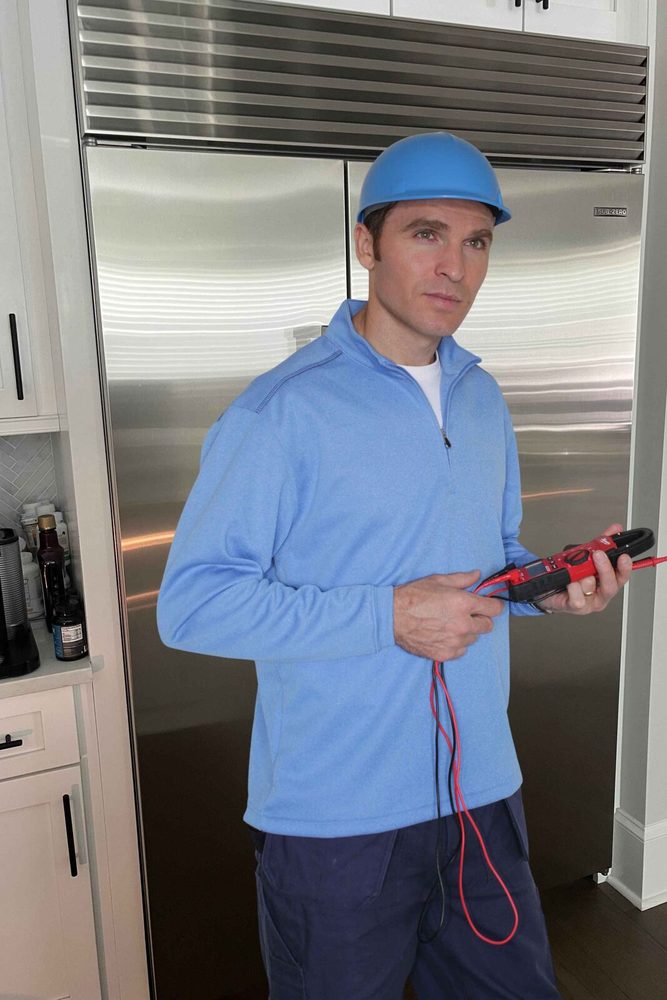
Perfect Appliance Repair technician testing a Sub-Zero built-in refrigerator with a multimeter in a Tampa Bay kitchen
We measure before we replace anything — real readings from your refrigerator, not a guess based on the symptom.
WHAT HAPPENS NEXT

What happens when our technician arrives

The tools on this page are here so you know what to expect before you call. They can't replace a technician standing in front of your refrigerator with a meter — but they do tell you which questions to ask, which parts are likely, and roughly how long the visit should take. That is usually enough to keep anyone from selling you a compressor when the real problem is a twelve-dollar sensor, or a condenser that hasn't been cleaned since the kitchen was built.

When we get there, we check it properly. Temperature sensors are measured against the factory values. Fan motors are tested while they run. A full defrost cycle is watched from start to finish. Door seals are checked all the way around. Only after all of that — and only if everything electrical is clean — do we go near the sealed system. You get the findings and the price in writing before any work starts.

TOOL 3 · LIGHTS, ALARMS & CODES

What the light, the alarm or the code on your Sub-Zero is telling you

Sub-Zero does not publish a public error-code list the way a mass-market brand does, so most of what circulates online is guesswork. Here is what the indicators on the cabinets we actually service mean, and what each one changes about the visit. Start typing to filter.

What you seeWhat it meansWhat we do about it
Vacuum CondenserService reminder — the condenser needs attentionThe control has seen the compressor run more than about 24 hours without reaching temperature. A loaded condenser is the first and most common cause, and a proper cleaning clears many of them. The pattern to take seriously is the message returning within days of a cleaning while the fridge section drifts warm — on 600-series cabinets that is the classic signature of a slow leak in the fresh-food evaporator. Never use oven cleaner or harsh chemicals on the coils.
Service light flashingProtection mode on legacy 400 and 600 seriesThe control has protected itself, most often because the condenser overheated or a thermistor drifted out of range. It is not a verdict on the compressor. We read the stored code at the control, inspect the condenser, and verify both probes before quoting anything.
Two-digit service codesStored diagnostic codes on BI and Designer cabinetsModern cabinets store two-digit service codes that a technician reads at the control — searches for "Sub-Zero error code 40" or "code 50" are common, but Sub-Zero does not publish a single public list and the meaning is model-specific. We read them at the unit rather than guessing from a forum thread, which is precisely why a photo of the display is useful when you call.
Door ajar alarmA door or drawer has been open past the alarm delayOften exactly what it says — but on a heavy built-in door it is also the first sign a hinge has settled or a gasket has stopped sealing, because the door is no longer closing itself the last quarter-inch. Worth checking the switch and the seal rather than only the habits of the household.
Temperature display flashingThe cabinet is outside its target bandA flashing setpoint usually means the cabinet has not reached temperature, or somebody is part-way through changing a setting. If it is flashing and the food is warm, treat it as the same emergency as any warm refrigerator; if it is flashing after a power cut, give it a few hours to pull down before assuming a fault.
Ice maker shows offThe ice maker is disabled, not necessarily brokenSub-Zero ice makers can be switched off at the control or by the arm, and they also shut themselves off after a fill fault. Confirm it is enabled and the water is on before anyone charges you for a diagnosis — that is a free check.
Water filter reminderFilter service interval reachedA maintenance prompt rather than a failure. Tampa Bay water is hard, so filters matter more here than the interval suggests: a neglected filter shows up as slow ice, cloudy cubes and, eventually, a scaled valve.
Sabbath modeA deliberate setting, not a faultDisables lights, alarms and displays. It is occasionally activated by accident and then reported as "the lights died" — worth ruling out before a service call, and it costs nothing to check.
Blank display, cabinet still coolingDisplay board or harnessThe refrigeration is fine and the human interface is not. Usually the display board or its ribbon connector rather than the main control — a much smaller repair than the symptom suggests.
Blank display, no coolingPower, main board, or transformerCheck the breaker and the outlet first. If power is present and the cabinet is dead, the fault is the main control board, its transformer, or the harness between them. After a Florida lightning storm, this is the most common damage we see — and the compressor is usually untouched, which makes it very repairable.

Note any error codes or messages before you call, and photograph the display if you can. A stored code plus the model number is often enough for us to load the right part on the truck, which is the difference between one visit and two.

TOOL 4 · IS IT WORTH REPAIRING?

Is it worth fixing a Sub-Zero refrigerator? Run your own numbers

The honest answer is usually yes, and this shows you why. A Sub-Zero built-in is engineered for a 20-year service life and we still see 30-year-old cabinets running in Tampa Bay. Replacement is not just the appliance — it is the cabinetry, the panel and the installation around it. Answer four questions and compare the two real numbers.

Your comparison appears here as soon as you choose.

This is a planning tool, not a quote. Ranges come from what this class of repair actually runs in Tampa Bay. Your real number is written down on site after the $69 diagnostic, before any work starts — we do not quote a Sub-Zero over the phone, and neither should anybody else.

TOOL 5 · MAINTENANCE PLANNER

How often your Sub-Zero really needs its condenser cleaned

Sub-Zero's own guidance is to clean the condenser coil every six to twelve months. That interval assumes an average kitchen, and Tampa Bay is not average. Tick everything that applies to your home and this gives you a realistic interval plus the routine maintenance that protects your investment between visits.

12months between condenser cleanings

An average kitchen with no aggravating factors. Tick what applies and this recalculates.

  • Every cleaningVacuum the condenser coil behind the toe-kick grille, then brush the fins the vacuum cannot reach. A loaded coil is the single most common reason a healthy Sub-Zero stops holding temperature.
  • Every monthCheck the door seals. Close the door on a dollar bill and pull — if it slides out with no drag, the gasket is letting warm, humid Florida air into the cabinet and the compressor is paying for it.
  • Every 6 monthsChange the water filter. Tampa Bay water is hard, so a neglected filter shows up as slow ice, cloudy cubes and eventually a fill-valve failure.
  • AlwaysKeep airflow to the grille clear, do not stack anything against the toe-kick, and note any error codes or unusual noises with the date — that history shortens every future diagnosis.

Routine maintenance is not upselling on a built-in. A condenser cleaned on schedule is the difference between a cabinet that reaches 30 years and one that needs sealed-system work at 15, and it is the cheapest energy-efficiency improvement available to a premium refrigerator.

ENGINEERING

Why Sub-Zero is built differently

A properly maintained Sub-Zero will run 20 to 25 years. I have customers with 30-year-old units still going strong.

After thousands of repairs across every refrigerator brand imaginable, I'll tell you plainly what I see from inside thousands of these machines: Sub-Zero is engineered to a standard the rest of the industry is still chasing. This isn't marketing. It's what separates the design from everything else.

The dual-compressor system gives fresh food and freezer their own independent refrigeration. Most refrigerators use a single compressor that cools the freezer and then dumps cold air into the fridge, which causes temperature swings and dries out your food. Sub-Zero holds precise, separate temperatures in each zone, so your vegetables stay crisp and your ice cream stays solid. The air purification system scrubs ethylene gas and bacteria from the cabinet air on a regular cycle, keeping food fresh far longer than a conventional refrigerator, and the technology traces back to the Space Shuttle program. The magnetic door seals and insulation are among the tightest in the industry, holding temperature through long door openings and power outages. The control board checks and adjusts temperature many times a day where most refrigerators check once every few hours. And most important for you: Sub-Zero designs these systems to be serviced, not thrown away. Components are accessible, and parts stay available for 20+ years.

EXPERT TAKE

Why you need a true specialist

The right choice means one proper repair that lasts another decade. That's what factory training delivers.

Here's something most repair companies won't tell you: a well-maintained Sub-Zero only needs major service about once a decade. That's not great for me as a business owner — I'd love to see you every year — but it's excellent news for you as an owner. It also raises the real question: when your Sub-Zero does need service, who do you call? A generalist who sees one Sub-Zero a year and treats it like any refrigerator, or someone who has spent twenty years inside these systems and knows how they behave when they fail?

The wrong choice means misdiagnosed problems and unnecessary part replacements, repairs that fail within months because the root cause was never addressed, a "just buy a new one" verdict from someone who can't fix what they don't understand, and real risk to a $15,000 to $25,000 investment.

Takeaway

If your Sub-Zero stopped working overnight, see our emergency refrigerator repair page.

MODELS

The Sub-Zero and built-in models we see most in Tampa Bay

Across Tampa Bay kitchens, a handful of Sub-Zero families account for most of the calls, and knowing your model number before I arrive usually tells me what I'm walking into and what to bring.

Classic Built-In (BI) series

The workhorse of the lineup here — models like the BI-36U and BI-30U over-and-under units, the BI-36R and BI-36F all-refrigerator and all-freezer columns, and the wider side-by-sides, the BI-42S, BI-42SD, BI-48S, and BI-48SD. These are the built-ins tucked into custom cabinetry in South Tampa and Wesley Chapel kitchens, and the failures repeat: worn door gaskets, evaporator fan motors, ice maker assemblies, and control-board issues.

Legacy 600-series (1990s–2000s)

Still very much alive in older Tampa Bay homes — full-size units like the 632, 642, 650, and 690, and side-by-sides like the 532, 561, and 661. There's an active parts market for these because owners rightly repair rather than replace.

700-series and PRO line

Including the PRO 48 and PRO 36 with their commercial styling — show up in higher-end and newer kitchens.

Designer & integrated columns

The integrated IC and ID column configurations and Designer panel-ready units are increasingly common in remodels built for a seamless, cabinet-matched look. On the undercounter side, I regularly service beverage centers, wine storage, and undercounter ice makers.

Whatever you own — a classic 600-series, a BI built-in, a PRO, a Designer column, a freestanding freezer, or an undercounter beverage center — I know how every component works. Don't see your model? If it says Sub-Zero, we can repair it. Call 813-522-0014.

OTHER PREMIUM BRANDS

Other premium built-in brands we service

Sub-Zero is our specialty, but we also service other premium built-in refrigeration that demands the same specialized knowledge and careful, cabinet-aware work: Viking, Thermador, Miele, Liebherr, GE Monogram, JennAir, Dacor, True Residential, Perlick, Marvel, U-Line, and built-in KitchenAid. Built-in refrigerators need a different approach than standalone units because replacement is expensive, cabinet fit matters, and airflow problems are common in integrated installations.

And because Sub-Zero and Wolf are the same company, the two usually share a kitchen — built-in refrigeration on one wall, the range or wall ovens on the other. Refrigeration is our specialty; if the cooking side is the problem, start at oven and range repair.

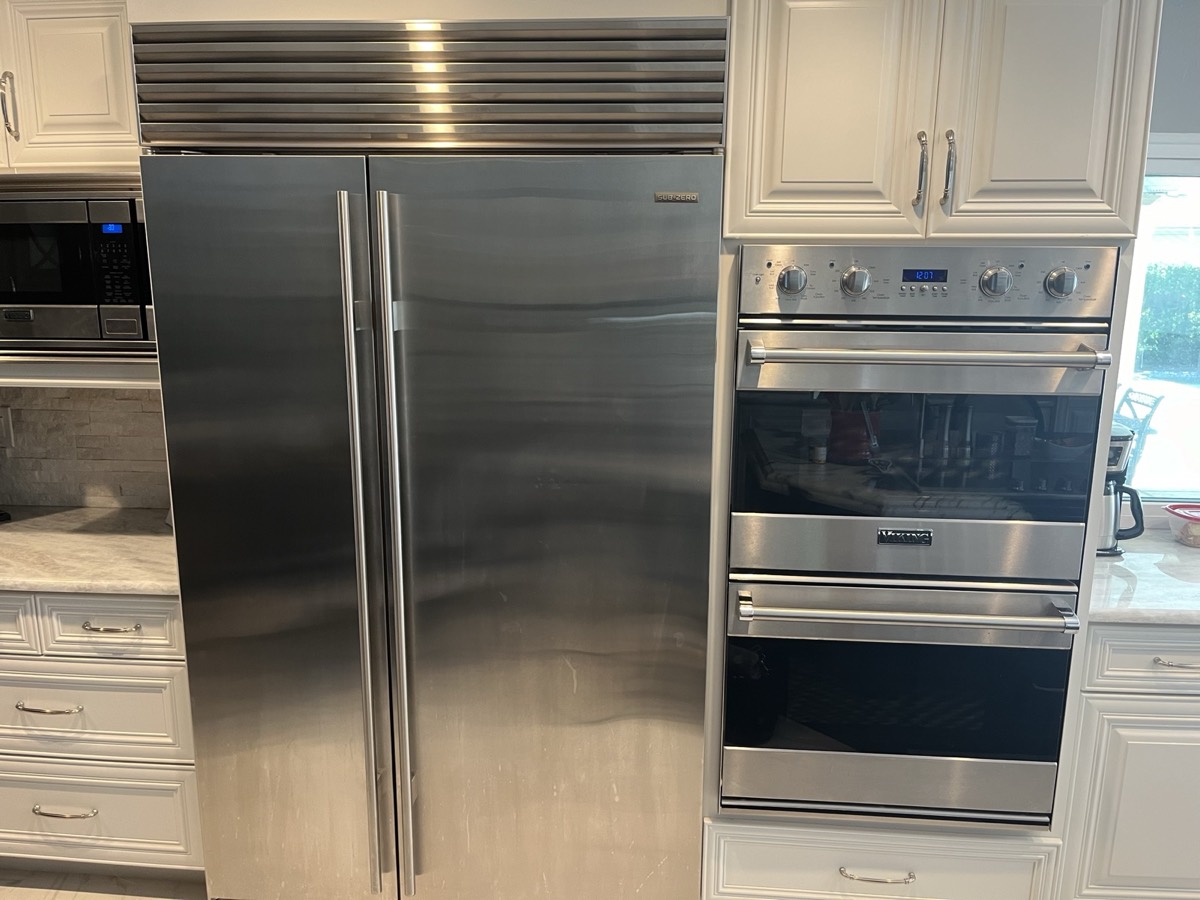
Sub-Zero built-in refrigerator beside a premium wall oven in a Tampa Bay kitchen
The usual pairing in a premium Tampa Bay kitchen: built-in refrigeration on one wall, wall ovens on the other.
THE REST OF THE SYSTEM

Wine storage, ice machines, freezers and undercounter units

A Sub-Zero kitchen is rarely one appliance. In South Tampa especially, the refrigerator is usually part of a set — a wine column in the butler's pantry, an undercounter ice machine at the bar, a separate all-freezer column beside the fresh-food cabinet. All of it is refrigeration, all of it fails in its own way, and all of it is work we do.

Sub-Zero wine storage

Dual-zone wine columns and undercounter wine storage drift out of range quietly — you notice when a bottle is warm, not when the compressor started struggling. Typical faults are the condenser, a fan motor, a thermistor reading wrong, or a door seal on a glass door that stopped closing square. See wine cooler repair.

Built-in and undercounter ice machines

Sub-Zero ice machines and the ice makers inside the built-ins are their own specialty: water inlet valves, fill-tube heaters, clogged drains, hollow or undersized cubes, and leaks that show up at the kick panel long after they started. See ice maker repair.

All-freezer columns and Sub-Zero freezers

A BI-36F or an IC freezer column runs its own sealed system, so it can fail entirely on its own while the refrigerator beside it holds temperature perfectly. Frost patterns, defrost components and door seals tell most of the story. See freezer repair.

Beverage centers and refrigerator drawers

Undercounter beverage centers and refrigerator drawers are compact refrigeration in tight cabinetry, which means airflow and clearance cause as many failures as components do. Outdoor-kitchen units near the water take corrosion damage years earlier than the same unit indoors.

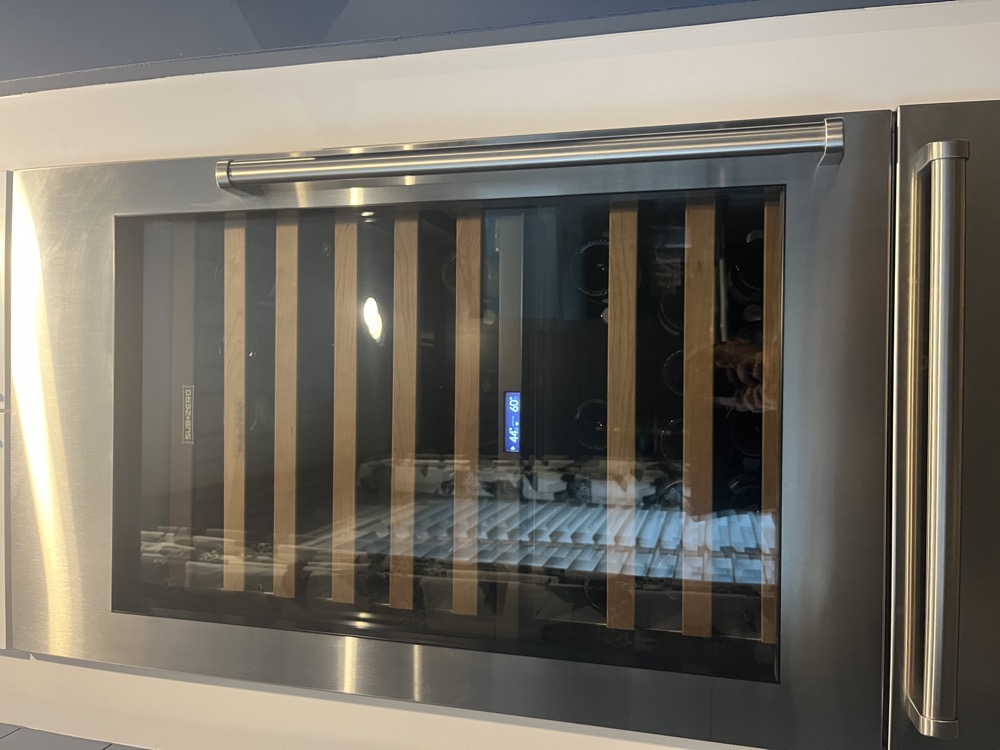
Sub-Zero wine storage column serviced in a Tampa Bay home
Wine storage holds a tighter temperature band than a refrigerator — a few degrees of drift is a real fault, not a quirk.
STRAIGHT ANSWER

Independent, not factory-certified — and when that matters

People searching for "authorized" or "factory certified" Sub-Zero repair deserve a direct answer instead of a blurred one, so here it is: we are an independent repair company. Sub-Zero runs its own factory-certified service network, and you can find it through the manufacturer's own service locator.

If your unit is still inside the Sub-Zero manufacturer warranty, start there — the repair may be covered, and we would rather tell you that than take the call. Sub-Zero's residential warranty is unusually long for the industry, so it is always worth checking your model and purchase date first.

Where we fit is everything after that: out-of-warranty Sub-Zero and Wolf equipment, which is most of the built-ins in Tampa Bay. Twenty-plus years of hands-on experience with these systems, genuine Sub-Zero parts, a 12-month parts and labor warranty on the work, and the owner doing the repair rather than a dispatched subcontractor. On a 12-year-old BI-42 that nobody else wants to open, that combination is worth more than a badge.

COMMON PROBLEMS

Common Sub-Zero problems we repair

Catching these early, before a small issue becomes an expensive one, is the whole game with a premium built-in.

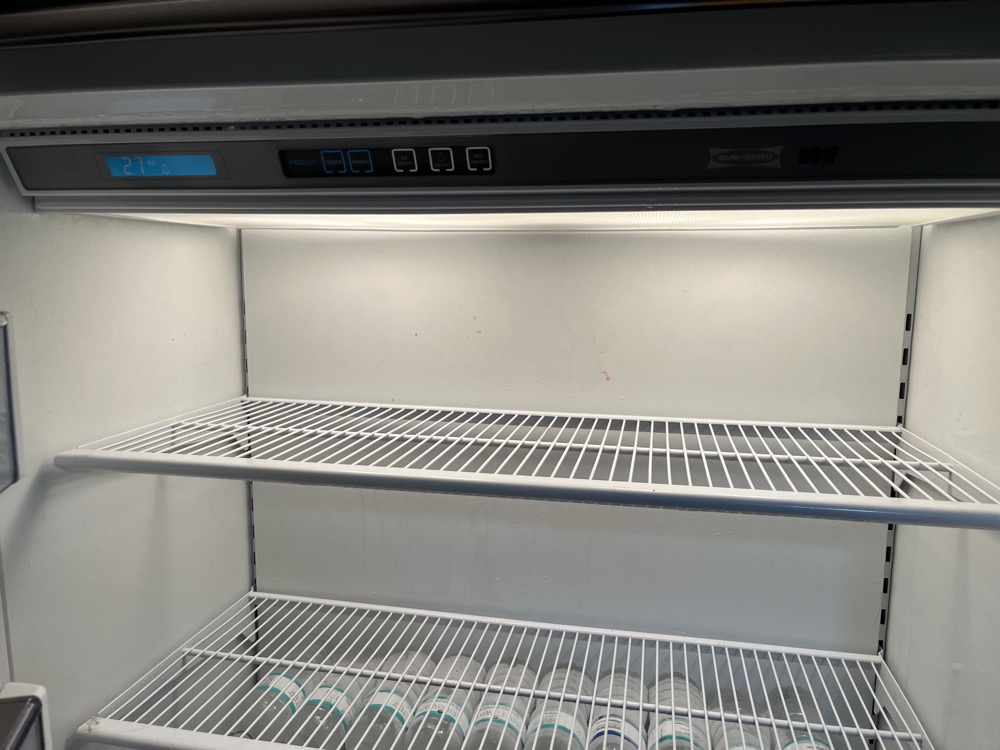
Interior of a Sub-Zero built-in refrigerator during a service call
Most Sub-Zero diagnoses start inside the cabinet — airflow, frost pattern and real temperatures before any panel comes off.

Warm fresh-food section

Usually points to a fan motor, damper, air diffuser, or a sealed-system issue.

Freezer too cold / food freezing in fridge

Often a thermistor, control board, or damper malfunction.

Ice maker not working or leaking

Traces to the water valve, inlet tube, fill-tube heater, or ice maker module — see ice maker repair.

Frost buildup in the freezer

Usually means a defrost heater, defrost timer, or thermistor failure.

Loud fan noise, constant running, short cycling

Points to the condenser fan, evaporator fan, or compressor stress.

Error codes and control issues

Come from the control board, display board, or a sensor.

Won't power on

Can be a power supply, control board, or electrical problem — often lightning-related here in Florida.

Water pooling under the fridge

Typically a clogged drain, a condensation issue, or humidity damage.

Compressor running but not cooling

Calls for a proper sealed-system diagnosis of refrigerant, evaporator, and compressor health.

FULL SERVICE

Our 7-point Sub-Zero expert service

Sub-Zero owners deserve more than a parts swap. This is the order the diagnostic actually runs in, from the cheapest causes to the most expensive.

1

Model and history before the visit

It starts before I arrive. Your model number — BI-36U, 632, PRO 48, an IC column — plus what the display is showing tells me which system I am walking into and what to load on the truck. On a built-in, arriving with the right part is half the repair.

2

Condenser and airflow

The first thing I look at on a Tampa Bay Sub-Zero. A condenser packed with dust, pet hair or salt film makes the unit run hot and long, and it is behind more premium-refrigerator failures here than any component defect.

3

Which system failed — and it is often only one

Dual compressors mean the fresh-food and freezer sections run independently, so one cabinet can sit at 55°F while the other holds 0°F perfectly. That single fact rules out half the parts list before anything is opened.

4

Sealed system under load

Compressor performance, evaporator frost pattern, condenser temperature split and refrigerant behavior — measured with gauges, under load. This is where an expensive misdiagnosis usually happens, and it is EPA-certified work by law.

5

Controls, thermistors and boards

Sensor readings against actual cabinet temperature, control-board condition, display errors and wiring. Florida lightning is hard on these boards, and a surge-damaged board imitates a dead compressor convincingly.

6

Door seals and the cabinet itself

Magnetic gaskets, hinge alignment, condensation patterns and how the unit sits in its cabinetry. A built-in that has shifted or a gasket that stopped sealing costs you cooling and runtime every hour of the day.

7

Genuine parts and a verified result

Genuine Sub-Zero parts for the repair, then temperatures and cycling verified in both cabinets before I leave — plus an honest maintenance interval for your kitchen. Backed by a 12-month parts and labor warranty.

This is why my Sub-Zero customers don't go looking for another repair company.

OUR PROMISE

Our service promise

Your Sub-Zero was built to be serviced, not replaced at the first sign of trouble. We don't push replacement when a proper repair makes sense. Before making any recommendation, we check the real condition of the unit — cooling performance, compressor health, airflow, sensors, controls, door seals, and overall repair value. We don't outsource Sub-Zero repairs to random contractors; when you call us, you get local, hands-on Sub-Zero experience and direct accountability. And we don't give phone quotes without a diagnosis, because "not cooling" can mean anything from a dirty condenser to a sealed-system problem. We test first, explain clearly, and give you a real estimate before any work begins.

No guessing, no pressure. Call 813-522-0014 for honest Sub-Zero repair in Tampa Bay.

LIFESPAN & CARE

How long does a Sub-Zero last, and what protects your investment

Sub-Zero builds this equipment to a twenty-year design life, and the honest answer to what is the average lifespan of a Sub-Zero refrigerator is that the number is largely in your hands. In Tampa Bay we still service 1990s 600-series built-ins that have outlived three ordinary refrigerators, and we have condemned twelve-year-old cabinets that never had the toe-kick grille off. The lifespan of your Sub-Zero comes down to airflow, the condenser and the door seals — the three things regular maintenance covers and neglect quietly destroys. That is why maintenance and care are not a service-company upsell on this brand. On a home appliance in this price class, routine maintenance is simply the cheapest way to protect your investment and hold its energy efficiency where it was the day it was installed.

Where an independent repair service fits alongside factory certified service

Sub-Zero, Wolf and Cove run a network of factory certified service providers, and a showroom or the Sub-Zero customer care team will point you to the certified service provider nearest you. While a unit is inside its manufacturer coverage that is the right call, and we will tell you so — warranty service should be claimed, not paid for twice. Out of warranty, an independent service company that specialises in Sub-Zero appliance repairs is usually the faster and better-value route: a quick response, a shorter wait for the day of service, and the same genuine replacement parts. Our service team keeps the common Sub-Zero and Wolf parts in stock on the van rather than ordering them after the first visit, which is what turns a complex repair into one appointment instead of three. Repair and maintenance on Sub-Zero equipment is most of what we do, week in and week out, and that repetition is exactly what you are paying for.

People also search for this as subzero repair, sub zero refrigerator repair near me, Sub-Zero appliance repair services, or simply Sub-Zero repair near me. Whatever you call it, the professional service you want is the one that arrives at your home with the meter, the parts and the twenty years of pattern recognition to know which of the four things it could be it actually is.

What protects the appliance between visits

  • 1Clean the condenser coil on the interval the planner above worked out for your kitchen. This is the single highest-value thing an owner can do.
  • 2Check door seals monthly. A refrigerator door that no longer pulls itself closed over the last quarter-inch is costing you energy efficiency and inviting frost.
  • 3Change the water filter every six months. Tampa Bay water is hard enough that the interval on the reminder is optimistic.
  • 4Note any error codes, the date and any new noise. That short history is often what separates a fifteen-minute diagnosis from an hour of elimination.
  • 5Keep the toe-kick grille clear. Nothing stacked against it, no rug over it, no cabinet panel screwed across it.

Ready to book a Sub-Zero visit? Call or text 813-522-0014 — reliable service, quality of work you can inspect yourself, and a written price before anything is opened up.

HONEST PRICING

Pricing: realistic ranges after diagnosis

Transparent pricing, no mystery fees, and no phone quotes pretending to be estimates.

$69
DIAGNOSTIC
APPLIED TO REPAIR

The diagnostic is $69, applied to your repair. All repair costs — defrost and airflow, sensor or thermistor work, control-board or electrical repairs, fan motor replacement, ice maker or water-system repairs, and sealed-system work — are quoted in writing after on-site diagnosis, before any work begins.

For perspective: a new Sub-Zero built-in runs roughly $12,000 to $18,000, and up to $25,000 for larger configurations. Most of our repairs are a fraction of that, and a properly done repair lasts another decade. And if a repair genuinely isn't worth it, we'll tell you honestly — protecting your investment is the point, not selling you something you don't need. If the repair isn't possible or doesn't make sense, you don't pay for labor or parts.

SOUTH TAMPA & THE WATERFRONT

What salt air does to a built-in

Sub-Zero country in this market is South Tampa — Hyde Park, Palma Ceia, Davis Islands, Beach Park — and the units there age differently than the same model inland. That is not a sales line, it is what comes off the truck at the end of the day.

Condensers load up faster near the water. Salt-laden humidity turns ordinary dust into a film that grips the coil fins, and a coil that would stay serviceable for a year in Lakeland needs attention twice as often here. On waterfront built-ins we recommend condenser cleaning every six months rather than the annual interval in the manual — it is the single cheapest thing an owner can do to protect a five-figure appliance.

Corrosion shows up at the connections first. Green-crusted wire terminals, pitted defrost-heater contacts and fan-motor bearings that rumble before they seize — these produce the intermittent, comes-and-goes cooling faults that get misdiagnosed as control boards. Every diagnostic near the bay includes a corrosion check for exactly that reason.

Lightning is the other local factor. Tampa Bay sits in the most lightning-prone corner of the country, and control boards are the common casualty. On a built-in, panel-level surge protection makes more sense than a plug-in strip, because the outlet is usually buried behind cabinetry where nobody will ever check it.

Sub-Zero built-in refrigerator during a service call in South Tampa with a genuine ice maker assembly on the counter
A South Tampa service call: genuine Sub-Zero ice maker assembly, diagnosis done before the box was opened.
WHERE WE WORK

Service areas

We provide same-day Sub-Zero service throughout Tampa Bay when available, including Tampa and South Tampa — Hyde Park, Palma Ceia, Davis Islands and Beach Park — along with New Tampa, Wesley Chapel, Lutz, Land O' Lakes, Odessa, Carrollwood, Zephyrhills and Dade City, across Hillsborough and Pasco Counties. Didn't find your area? If it's a Sub-Zero, we can help you anywhere in Tampa Bay — see the full service area or call or text (813) 522-0014.

QUICK ANSWERS

Frequently asked questions about Sub-Zero repair in Tampa Bay

Is a Sub-Zero refrigerator worth repairing?

In many cases, yes. A Sub-Zero isn't a disposable refrigerator — these units were designed to be serviced and maintained for decades. If the cabinet is in good condition, parts are available, and the sealed system is still repairable, a proper repair often makes far more sense than replacing a premium built-in. Before recommending repair or replacement, we look at the full picture: age, model, compressor health, evaporator condition, airflow, control system, door seals, repair cost, and long-term value.

Why call a Sub-Zero specialist instead of a regular repair company?

Sub-Zero refrigerators are built differently, with advanced airflow, precise temperature controls, sealed-system components, thermistors, control boards, and often dual-compressor or built-in configurations. A general technician may be fine with basic appliances, but Sub-Zero diagnosis takes a different level of experience, and guessing on these machines gets expensive fast.

Do you also repair Wolf appliances?

Sub-Zero and Wolf are the same company, and the two usually live in the same kitchen — the built-in refrigeration on one wall, the range or wall ovens on the other. Refrigeration is our specialty; for the cooking side see our Wolf and oven and range repair pages. If you are not sure which unit is failing, describe both on the phone and we will sort it out before the visit.

How long does a Sub-Zero repair take?

With the part on the truck, most Sub-Zero repairs finish in one visit, typically two to four hours including diagnosis, because built-ins take longer to open and close properly than a freestanding unit. Sealed-system work runs longer. If a genuine part has to be ordered we usually return within two to five days.

What should I do before the technician arrives?

Three things help most: photograph the model and serial plate (inside the fresh-food compartment on most built-ins) and any error on the display, note which cabinet is warm and roughly when it started, and clear a working path in front of the unit. If the unit is completely warm, move what matters into a cooler rather than opening the doors to check on it.

Why is my Sub-Zero not cooling?

It can have several causes: dirty condenser coils, a failed fan motor, a bad thermistor, a control board issue, a defrost problem, a sealed-system restriction, a refrigerant leak, a weak compressor, or an airflow problem. That's why "not cooling" is a symptom, not a diagnosis. The correct repair starts with testing the system, not guessing over the phone.

Why is my Sub-Zero freezer cold but the refrigerator side warm?

This can happen with an airflow issue, an evaporator problem, a fan failure, a sensor issue, a door-seal leak, or a control problem. On Sub-Zero units, the freezer and refrigerator sections often run as separate systems, so one side can fail while the other still works. A proper diagnosis checks both temperature performance and how the system moves air.

Why is my Sub-Zero making a loud noise?

Common causes include a failing evaporator fan, a condenser fan motor, ice buildup around the fan, compressor vibration, loose panels, or airflow restriction. The location of the noise matters — a sound from inside the cabinet is different from one near the compressor or condenser. We find the source before replacing parts.

Why does my Sub-Zero keep running all the time?

It may run too long because of dirty condenser coils, weak door seals, poor airflow, high kitchen temperature, a sensor or control issue, sealed-system weakness, or a compressor working harder than normal. In Tampa Bay, heat, humidity, and dust make this worse, especially if the condenser hasn't been cleaned.

Can dirty condenser coils damage a Sub-Zero?

Yes. Dirty coils make the system run hotter and longer, which over time stresses the compressor, control system, fan motors, and sealed system. For a Sub-Zero in a Florida home, condenser cleaning isn't just maintenance — it's protection for an expensive built-in appliance.

Why don't you give Sub-Zero prices over the phone?

Because an honest estimate requires diagnosis. The same "not cooling" complaint could be an airflow problem, a fan motor, a sensor, a control board, a refrigerant issue, or a compressor — repairs with completely different prices. A phone quote without testing is a guess, or a low number just to get in the door. We diagnose first, explain what failed, and give you a real estimate before work begins.

Do you push replacement if the Sub-Zero is older?

No. Many older Sub-Zero units are still worth servicing, especially if the cabinet is solid and the repair cost is reasonable next to replacement. But we won't pretend every repair is worth doing — if replacement is the smarter financial decision, we'll tell you honestly. Our job is to protect your investment, not sell you something you don't need.

Do you outsource Sub-Zero repairs to subcontractors?

No. We don't send random contractors to handle premium built-in refrigeration. When you call, you get local, hands-on Sub-Zero experience and direct accountability, which matters because this work requires careful diagnosis, proper disassembly, and respect for your cabinetry.

Are you a factory-certified Sub-Zero service center?

No — we are an independent repair company, and we would rather say that plainly than blur it. Sub-Zero maintains its own factory-certified network, and if your unit is inside the manufacturer warranty period, going through Sub-Zero's own locator is usually the right call because the repair may be covered. What we offer is independent service for out-of-warranty Sub-Zero and Wolf equipment: 20+ years of hands-on technical experience with sealed-system refrigeration, genuine Sub-Zero parts, a 12-month parts and labor warranty on our work, and direct accountability from the owner who does the repair. Many of the built-ins we keep running are well past any factory coverage.

Do you repair out-of-warranty Sub-Zero appliances?

That is most of what we do. Once a Sub-Zero is past its manufacturer warranty, the owner needs a technician who can actually diagnose the system rather than swap assemblies, because there is no warranty absorbing the cost of guessing. We service in-warranty units too, but if the repair is likely covered by Sub-Zero we will tell you to check that first.

What Sub-Zero models do you service?

Many models, including built-in refrigerators, classic 600-series units, BI-series, PRO models, Designer series, undercounter units, wine storage, column refrigeration, and freezers. If your Sub-Zero is built into custom cabinetry, we also take care to protect the surrounding kitchen during service.

Do you repair built-in refrigerators besides Sub-Zero?

Yes — many premium built-in brands, including Monogram, Thermador, Viking, built-in KitchenAid, JennAir, Miele, Liebherr, Marvel, and U-Line. Built-in units need a different approach because replacement is costly, cabinet fit matters, and airflow problems are common.

What's included in your Sub-Zero diagnostic?

We check cooling performance, compressor operation, fan motors, condenser condition, evaporator frost pattern, temperature sensors, control signals, door seals, airflow, electrical condition, and signs of sealed-system trouble. For Florida homes, we pay close attention to humidity, heat stress, power-surge damage, and condenser buildup.

Do you offer a warranty on Sub-Zero repair?

Yes. We stand behind our work with a 12-month parts and labor warranty on qualifying Sub-Zero repairs. We use proper parts and repair methods, because premium refrigerators shouldn't be patched with cheap temporary fixes.

How fast can you repair my Sub-Zero?

Same-day service may be available when you call before 2 PM. If it isn't, we offer priority next-day scheduling when possible, together with your choice of $30 off or a free surge protector. We serve Tampa, South Tampa, Wesley Chapel, Zephyrhills, Dade City, Land O' Lakes, Lutz, Odessa, Carrollwood, and nearby Tampa Bay areas.

What is the average lifespan of a Sub-Zero refrigerator?

Sub-Zero designs this equipment around a twenty-year service life, and in practice that is a floor rather than a ceiling. We regularly work on 600-series and 700-series built-ins in Tampa Bay that are 25 to 30 years old and still holding temperature, and we occasionally condemn a twelve-year-old cabinet that never had its condenser cleaned. The lifespan of your Sub-Zero is mostly decided by three things: condenser coil cleanings on a sensible interval, door seals that still pull the door closed, and clear airflow at the toe-kick grille. Regular maintenance on those three is the cheapest way to protect your investment in this appliance.

Can a Sub-Zero refrigerator be repaired, or does it have to be replaced?

Almost always repaired. Sub-Zero built this equipment to be serviced — the sealed system, compressors, evaporators, control boards, fans, gaskets and ice makers are all replaceable, and genuine replacement parts remain available for platforms that left the factory decades ago. Replacement only wins when the cost of the repair approaches the cost of a new cabinet plus the panel and installation, which on a built-in is rarely the case. The repair-or-replace tool higher up this page runs those two numbers side by side for your cabinet, and we will tell you honestly if yours is the exception.

Do you service Cove dishwashers and other Sub-Zero Group appliances?

Sub-Zero, Wolf and Cove are the same group, and a household that owns one usually owns two. We service Sub-Zero refrigeration and Wolf cooking equipment as an independent appliance repair company; for Cove dishwashers, call and describe the fault and we will tell you straight whether it is something we take on or whether the factory certified service provider is the better route for that particular unit. We would rather send you to the right place than take a job we are not the best answer for.
RELATED

Where to go next

PROOF, NOT PROMISES

What Tampa Bay Sub-Zero owners say

A specialist's reputation should be easy to verify. You can read customer reviews on our Google Business Profile and our BBB Business Profile, and you're welcome to leave a review after we've serviced your Sub-Zero.

Your Sub-Zero deserves a specialist

You invested in one of the finest refrigeration systems ever made. When it needs service, don't settle for a generalist who treats it like any other refrigerator. Your Sub-Zero deserves someone who has spent two decades inside these systems, and a repair that lasts another decade. "Too old" isn't in my vocabulary — I repair what others turn away.

Sub-Zero specialist: (813) 522-0014

Call before 2 PM for same-day service. The $69 diagnostic is applied to your repair, with nothing added on top. 12-month parts and labor warranty, genuine Sub-Zero parts, 20+ years of hands-on technical experience — in-warranty and out-of-warranty units welcome.

Perfect Appliance Repair Tampa — Sub-Zero and Built-In Refrigerator Repair.

— We Stand Behind Our Work —

Repair guides from real service calls

Free troubleshooting write-ups from real Tampa Bay service calls — what usually causes it, and what it takes to fix.

All repair guides · Full site index

Call now
Get your free quote
We confirm within the hour, Monday – Saturday

No obligation. Your info is never shared.